10 Ways to Reduce Your DEWA Bill in Summer in Dubai (2026)
How to reduce DEWA bill in summer: nine proven ways to cut AC cooling costs, from the 24°C setting to clean filters, standby power and DEWA app alerts.

The fastest way to cut a Dubai summer electricity bill is to set the air-conditioning thermostat to 24°C. Clean the AC filters every month, and switch off standby appliances and the water heater. Cooling drives up to 70% of a summer bill, so each 1°C lower adds around 5% to your cooling cost.
Learning how to reduce your DEWA bill in summer starts with one simple truth: your air conditioning is the culprit. From June to September, cooling drives most of what you pay, and small habits swing the total by hundreds of dirhams.
DEWA is the Dubai Electricity and Water Authority, the government body supplying your power and water. It charges more per unit as you use more, so a hot month pushes you into pricier slabs and the bill jumps.
This guide gives you ten proven ways to lower the number. You get the obvious wins first, then the pro-level tricks that most residents miss.
How to Reduce Your DEWA Bill in Summer
How to reduce your DEWA bill in summer comes down to ten moves, from cooling smarter to cutting wasted power. Together they cut a typical summer bill by 20–35%.
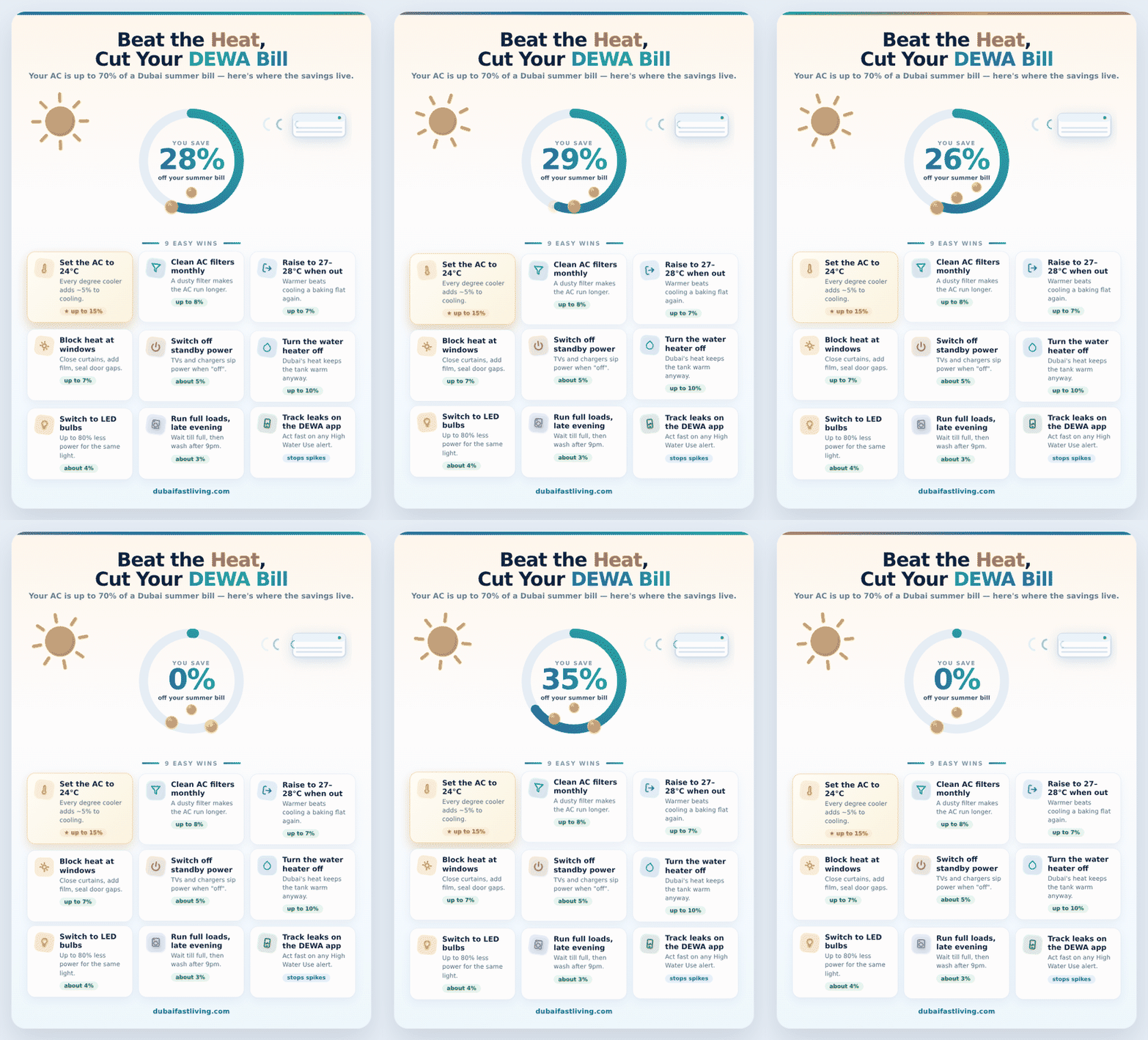
Here is the full plan at a glance. Each tip below is one clear action, with how much it saves.
Tip #1: Set the Thermostat to 24°C
DEWA’s own figures show each degree below 24°C adds about 5% to your cooling energy. Move the thermostat from 20°C to 24°C and you cut roughly 20% off the biggest slice of your bill.
Tip #2: Choose an Inverter AC With a High Efficiency Label
An inverter AC varies its compressor speed instead of clicking fully on and off. That uses up to 30% less electricity than an old fixed-speed unit for the same cooling.
Same cooling, less power: inverter vs old AC
When you buy or replace a split AC, pick the highest energy-efficiency star rating on the label and match the unit size to the room. An oversized AC short-cycles and wastes power; an undersized one never rests.
Tip #3: Clean the AC Filters Every Month
A clogged filter can raise AC energy use by 5–15%, per the US Department of Energy. In dusty Dubai, rinse or vacuum the AC filters monthly and book one deep service before summer.
Tip #4: Raise the AC to 27–28°C When You Go Out
Switching the AC off in a Dubai summer backfires. Set it to 27–28°C while you are out, so it idles instead of hauling a 45°C flat back to cool.
Tip #5: Block the Heat at Your Windows
Up to a third of unwanted heat pours straight through sunlit glass, says the US Department of Energy. Close curtains, add reflective window film and seal door gaps to keep that heat outside.
Tip #6: Switch Off Standby Power
Idle TVs, routers, chargers and set-top boxes can draw 5–10% of a home’s electricity. Switch them off at the wall, or wire them to one smart power strip you flick off at night.
Tip #7: Turn the Water Heater Off in Summer
An electric water heater is often the second-biggest load after the AC. Dubai’s heat keeps the tank warm, so flip the geyser off at the wall and you barely notice.
Tip #8: Switch to LED Bulbs
LED lights use up to 80% less electricity than old incandescent bulbs and last far longer. Swap the lights you leave on most first, like the kitchen and living room.
Tip #9: Run Full Washing Loads, Late Evening
Half-empty washing and dishwasher cycles waste both water and power. Wait for a full load and run it after 9pm, when it is cooler and the machine adds less heat indoors.
Tip #10: Track Use and Fix Leaks on the DEWA App
The DEWA Smart Living app shows your electricity consumption and water use day by day. Act fast on any High Water Use alert, since one hidden leak can swell a bill by a third.
These savings overlap, so they do not simply add up. Done together, they cut a typical summer bill by 20–35%.
Want to see your own numbers first? Use the estimator below to test how much each change saves on your monthly bill.
⚡ DEWA Summer Bill & Savings Estimator
Enter your monthly electricity use, pick your AC temperature, then tick the tips you will follow. Your estimated saving updates instantly. Figures use the 2026 DEWA slab tariff plus fuel surcharge and 5% VAT.
Clean AC filters monthly Close curtains & seal gaps Cut standby power Switch off water heater Swap to LED lights
Set your AC to 24°C to unlock the biggest cooling saving.
The estimator proves one point every time: the thermostat moves the needle most. That is where the rest of this guide on how to reduce electricity bill in Dubai begins.
Why Is My DEWA Bill So High in Summer?
Your DEWA electricity bill is high in summer because air conditioning runs almost non-stop and DEWA charges pricier rates for heavy use. Cooling makes up as much as 70% of summer DEWA electricity consumption in a Dubai home, according to The National.
A high DEWA bill in summer is almost always a cooling story. The DEWA electricity tariff uses a slab system, so the price per unit, in fils per kWh, climbs as your monthly total rises.
📊 DEWA residential electricity slab tariff (2026)
| Monthly use (kWh) | Rate | What it means |
|---|---|---|
| 0–2,000 | 23 fils/kWh | Cheapest slab — a small flat in winter |
| 2,001–4,000 | 28 fils/kWh | Typical summer flat or small villa |
| 4,001–6,000 | 32 fils/kWh | Larger villa cooling all day |
| Above 6,000 | 38 fils/kWh | Big villa — the priciest units |
Add a fuel surcharge of about 6.5 fils/kWh and 5% VAT on top. A 5% Dubai Municipality housing fee also sits on the bill. Source: DEWA slab tariff.
What is the fuel surcharge? It is a small extra charge per unit that moves with global fuel prices.
In 2026 it sits near 6.5 fils/kWh, added to every kilowatt-hour you use.
So a heavy cooling month does double damage. You burn more units, and each extra unit costs more once you cross into a higher slab.
🔥 The slab trap
Cross 2,000 kWh in a month and every extra unit jumps from 23 to 28 fils. Trimming just a few hundred kWh keeps you in the cheaper band and quietly lowers your monthly bill.
What AC Temperature Saves Most on Your DEWA Bill?
The best AC temperature to reduce your DEWA bill is 24°C, the setting DEWA recommends for comfort and energy efficiency. DEWA advises keeping the thermostat at 24°C or higher, since each degree increase saves up to 5% on AC consumption.
Your thermostat is the single biggest lever you hold, since dropping to 20°C burns roughly 20% more cooling power. Dressing light helps too, so check what to wear in Dubai’s summer to stay comfy at 24°C.
🌡️ AC setting vs estimated monthly cooling cost (1-bed flat)
| Thermostat setting | Cooling use (kWh) | Approx cost | vs 24°C |
|---|---|---|---|
| 20°C | 1,080 | AED 325 | +AED 55 |
| 22°C | 990 | AED 300 | +AED 30 |
| 24°C (recommended) | 900 | AED 270 | — |
| 26°C | 810 | AED 245 | −AED 25 |
Estimate based on ~900 kWh baseline cooling at 24°C and DEWA’s ~5% per degree figure. Your home varies with size and insulation.
Set a fan to run alongside the AC for the same comfort at a warmer setting. Moving air feels two to three degrees cooler on the skin, per Gulf News.
❄️ The 24°C rule
On its official Set your AC to 24°C page, DEWA says each degree increase saves up to 5% on AC consumption. That makes 24°C the best AC temperature to reduce DEWA bill totals, as the compressor cycles off more often.
Is It Cheaper to Leave the AC On All Day in Dubai?
Yes, for short absences it is cheaper to leave the AC on a higher setting than to switch it off. A home left to bake at 45°C forces the compressor to work far harder to cool it back down when you return.
This is how to reduce DEWA bill without turning off AC completely. Raise the setting to 27–28°C while you are at work, then bring it back to 24°C at home.
Leaving the home sealed and warm also invites humidity damage. A high, steady setting protects your furniture and your monthly bill at once.
What Uses the Most Electricity in a Dubai Home?
Air conditioning uses the most electricity in a Dubai home by a wide margin, followed by the water heater and the fridge. Cooling alone accounts for 60–70% of summer electricity consumption, which is why every saving plan starts with the AC.
Knowing where the units go tells you where to aim. Here is how a typical summer bill splits across the home.
🔌 Where your summer DEWA bill goes
Share of a typical Dubai home’s summer electricity use.
📋 Typical appliance use in a Dubai summer month
| Appliance | Typical use (kWh/month) | Approx cost |
|---|---|---|
| Air conditioning | 900–1,400 | AED 270–420 |
| Electric water heater | 150 | AED 45 |
| Fridge-freezer | 60 | AED 18 |
| Lighting | 50 | AED 15 |
| Washing machine & dryer | 45 | AED 14 |
| TV, router & electronics | 40 | AED 12 |
Costs use a blended rate of about 0.30 AED/kWh (tariff plus surcharge and VAT). AC dominates every other line.
For a 1 bedroom apartment, the AC alone often costs more than everything else combined. So how to lower DEWA bill in a 1 bedroom apartment starts and ends with cooling smarter.
How Do Clean AC Filters and Servicing Cut Your Bill?
Clean AC filters cut your bill because a clogged filter forces the unit to work harder for the same cooling. DEWA recommends cleaning the AC filters at least once a month during summer, one of the simplest DEWA bill saving tips.
Dust builds fast in Dubai. A blocked filter starves the airflow, so the compressor runs longer and drinks more power to hit the same temperature.
A serviced unit in good shape cools a room in half the time of a neglected one. That gap in running time is pure saving on your monthly bill.
How to Reduce AC Electricity Consumption With Curtains and Insulation
Here is how to reduce AC electricity consumption in Dubai: block the heat before it enters, using curtains, blinds and sealed gaps. Keep the sun out and your AC works far less, an easy win for anyone reducing their electricity bill in Dubai.
Sunlight through glass turns a room into a greenhouse. Thick curtains or blackout blinds reflect that heat back outside.
- Close curtains and blinds on sun-facing windows through the hottest hours.
- Seal door and window gaps with cheap draught strips, so cool air stays in.
- Add reflective film to large windows to block solar heat.
- Shut doors to unused rooms and cool only the space you live in.
🌬️ Chase the draughts
Warm air leaks in through gaps under doors and around old windows. Good insulation and simple sealing stop that leak, so your cooled air lasts longer and the AC rests more.
These fixes cost little and last for years. For more, see our guide on how to keep your house cool in Dubai and the best indoor things to do in Dubai’s summer.
How to Cut Standby Power, Water Heating and Lighting
You cut hidden waste by killing standby power, switching off the water heater in summer, and swapping to LED lights. Together these trim around 10–13% off a typical bill, small next to the AC but easy to bank.
What is standby power? It is the electricity that TVs, chargers and set-top boxes draw while switched off but still plugged in.
This phantom load adds up to about 5% of a monthly bill.
The water heater is the quiet second-biggest load in most homes. Dubai’s summer keeps the cold tap warm, so the geyser sits off for months.
Run the washing machine and dishwasher only with full loads. Fewer cycles means fewer units and less strain on your monthly bill.
Pro-Level DEWA Bill Saving Tips
The pro way to reduce DEWA bill Dubai residents miss is to track usage, catch waste early, and use DEWA’s own tools. These are the electricity saving tips Dubai homeowners often skip.
One more distinction matters for renters. A chiller-free home is metered fully through DEWA, while district-cooling homes pay a separate chiller charge on top.
- Shift heavy loads to off-peak evenings when the home already needs less cooling.
- Set AC timers to switch off an hour before you leave and on before you return.
- Fix dripping taps fast, since hot-water leaks waste both power and water.
- Compare your bill month to month in the app to catch a creeping rise early.
The same heat that spikes your bill also strains cars and bodies. See our guides on a car overheating in Dubai, a car parked in the sun, and staying safe when running in Dubai’s summer.
What to Check if Your DEWA Bill Suddenly Jumps
If your DEWA bill suddenly jumps, check the AC first, then look for a water leak or fuel surcharge change. A sharp rise almost always traces back to cooling running longer or a hidden leak draining water.
🔍 Quick checklist for a sudden spike
1. Is the AC set lower than usual, or running around the clock? 2. Did a hotter month push you into a pricier slab? 3. Is there a High Water Use alert in the DEWA app from a leak? 4. Did the fuel surcharge change this month? 5. Is a new appliance or guest adding load?
Open the DEWA app and read the daily graph. A steady climb points to cooling, while a sudden flat rise in water often means a leaking tank or toilet.
Key Takeaways
✅ The saving plan in five facts
- Air conditioning drives up to 70% of a Dubai home’s summer electricity, so it is where every saving begins.
- DEWA recommends 24°C, and each 1°C lower adds about 5% to your cooling cost.
- Cleaning AC filters monthly and servicing the unit yearly keeps the compressor running less.
- Standby power, an idle water heater and old bulbs together waste around 10–13% of a bill.
- The DEWA app shows daily use and flags leaks, so you catch a rising bill before it lands.
Do the ten steps together and a summer bill falls by a fifth to a third. That is real money back in your pocket every hot month.
Frequently Asked Questions
How to reduce DEWA bill in summer without turning off the AC?
You learn how to reduce your DEWA bill in summer by cooling smarter, not by switching the AC off. Set the thermostat to 24°C, run a ceiling fan alongside it, and raise the setting to 27–28°C while you are out. Clean the AC filters monthly so the compressor works less. Close curtains on sun-facing windows and seal door gaps to keep cool air in. These habits cut cooling energy by 20% or more while your home stays comfortable throughout the hottest months.
Why is my DEWA bill so high in summer?
Your DEWA bill is high in summer because air conditioning runs almost non-stop and DEWA charges more per unit as you use more. Cooling makes up as much as 70% of a Dubai home’s summer electricity use. DEWA applies a slab tariff, so once you pass 2,000 kWh in a month, each extra unit jumps from 23 to 28 fils. A fuel surcharge of about 6.5 fils per kWh and 5% VAT sit on top. A hot month burns more units and pushes each one into a pricier band.
What is the best AC temperature to reduce a DEWA bill?
The best AC temperature to reduce a DEWA bill is 24°C, the setting DEWA recommends for comfort and efficiency. Each 1°C lower adds around 5% to your cooling energy, so dropping to 20°C burns roughly 20% more power for no real gain in comfort. Pair 24°C with a fan and the moving air feels two to three degrees cooler on your skin. This lets you sit at a higher, cheaper setting and still feel cool through a Dubai summer afternoon.
Is it cheaper to leave AC on all day in Dubai?
For short absences, it is cheaper to leave the AC on a higher setting than to switch it off. A home left to bake at 45°C forces the compressor to work far harder to cool it back down when you return. Raise the setting to 27–28°C while you are at work, then drop it to 24°C at home. For a week away, use a timer or leave one unit on auto at a high setting to block damp, mould and musty smells in the humidity.
How can I reduce my electricity bill in a 1 bedroom apartment?
To lower your DEWA bill in a 1 bedroom apartment, focus on the AC because it often costs more than everything else combined. Set it to 24°C, clean the filters monthly, and cool only the rooms you use. Close curtains during the day and seal gaps around doors and windows. Switch off the water heater in summer and cut standby power at the wall. Swap old bulbs for LED lights. These small steps trim a flat’s summer bill by a fifth without any big spend.
How much can I save on my DEWA bill in summer?
Following all ten steps together cuts a typical summer DEWA bill by 20–35%. The thermostat delivers most of it, since moving from 20°C to 24°C saves around 20% of cooling energy on its own. Clean AC filters and blocked heat add several more percent. Cutting standby power, switching off the water heater and using LED lights save another 10–13% between them. For a villa paying AED 1,200 a month to cool, that mix returns AED 240 or more each hot month.
What uses the most electricity in a Dubai home?
Air conditioning uses the most electricity in a Dubai home by far, followed by the water heater and the fridge. Cooling accounts for 60–70% of summer electricity consumption. Water heating adds about 12%, the fridge and appliances around 10%, lighting 6%, and standby power near 5%. Because the AC dominates every other line, the fastest saving always comes from cooling smarter. Raise the thermostat, clean the filters, and block heat at the windows before worrying about smaller loads.
What should I check if my DEWA bill suddenly rises?
If your DEWA bill suddenly rises, check the AC first, then look for a water leak and a change in the fuel surcharge. Open the DEWA app and read the daily graph. A steady climb points to cooling running longer or set too low. A sudden jump in water often means a leaking tank or toilet, and the app flags this with a High Water Use alert. Also check whether a hot month pushed you into a pricier tariff slab, or a new appliance added load.
Do LED lights really lower a DEWA bill?
Yes, LED lights lower a DEWA bill, though the saving is modest next to the AC. LED bulbs use up to 80% less power than old filament bulbs for the same brightness, and they last far longer. Lighting is around 6% of a typical summer bill, so a full swap trims a few percent overall. The real value stacks up over years of use and less frequent replacing. Combine LED lights with cutting standby power and switching off the water heater for a solid extra saving.
How does a DEWA bill calculator help me save?
A DEWA bill calculator turns your monthly kWh into a dirham figure using the slab tariff, fuel surcharge and 5% VAT. That shows exactly how close you sit to the next pricier slab at 2,000 kWh. Enter a lower usage figure and you see the saving from raising the AC or cutting standby power in real dirhams. The estimator on this page does the same and lets you toggle each tip. Seeing the number move makes it far easier to stick with the habits that lower your bill.
Sources: DEWA residential slab tariff, fuel surcharge and 24°C recommendation from DEWA (dewa.gov.ae); air-conditioning share of summer use and per-degree figures from The National and Gulf News; Dubai Municipality 5% housing fee and 5% VAT per DEWA billing rules.