Visiting Dubai During Ramadan: 8 Things To Keep In Mind – From ‘Can I Eat in public?’ to ‘What should I wear?’
If you are visiting Dubai during Ramadan, you do not need to cancel your plans. The city remains open, safe, and active. However, the rhythm changes. Days are slower. Nights are busier. And there are cultural norms you should understand before you land. This guide breaks it down clearly so you know

If you are visiting Dubai during Ramadan, you do not need to cancel your plans. The city remains open, safe, and active. However, the rhythm changes. Days are slower. Nights are busier. And there are cultural norms you should understand before you land.
This guide breaks it down clearly so you know what to expect, whether you are coming for vacation, work, or a short layover.
First, What is Ramadan?
Ramadan is the ninth month of the Islamic calendar. Muslims fast daily from dawn (Fajr prayer) until sunset (Maghrib prayer). In Dubai, fasting hours are typically around 13–14 hours depending on the time of year.
During fasting hours:
- No food or drink
- No smoking
- No chewing gum
The fast is broken at sunset with Iftar. The pre-dawn meal is called Suhoor.
When is Ramadan in Dubai?
In Dubai, Ramadan 2026 is expected to begin on the evening of February 18, 2026, with the first day of fasting on February 19, and conclude around the evening of March 19, 2026, subject to moon sighting.
The holy month ends with the celebration of Eid al-Fitr, marking the start of Shawwal in the Islamic calendar.
For visitors, this affects how the city operates during the day. This is what this period means for you:
#1. Can You Eat and Drink During the Day?
Yes — but with awareness.
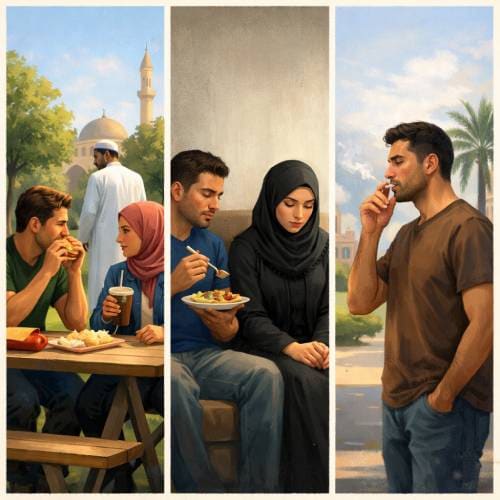
Until a few years ago, Dubai had stricter daytime rules during Ramadan. Non-fasting residents and visitors were generally required to eat and drink only inside screened areas, many restaurants stayed closed until sunset, and public consumption of food, drinks, or cigarettes during fasting hours could lead to fines.
In recent years, the city has relaxed many of these restrictions. Most restaurants, cafés, and malls now operate normally during the day, and dining areas no longer need to be physically covered. While eating and drinking in public is legally permitted, visitors are still expected to act respectfully during fasting hours.
Most:
- Hotels
- Malls
- Major restaurants
- Food courts
… remain open during the day.
However:
- Eating or drinking in public outdoor spaces is discouraged.
- It is respectful to avoid eating in front of someone who is fasting.
- Smoking in public during daylight is not advised.
Inside malls, airports, hotels, and office buildings, you will find normal dining options.
If you are staying at a hotel, breakfast and lunch service will continue as usual.
#2. Business Hours: What Actually Changes?
Government entities operate on reduced hours during Ramadan. Expect shorter working days for public sector offices.
“Important note: If you are in Dubai for work, during Ramadan, especially any work that requires coordination with Government offices, expect the work to take more time than usual.”
Private companies also reduce working hours, typically by 2 hours per day as mandated by UAE labor law.
What this means for you:
- Government services close earlier.
- Banks operate shorter shifts.
- Deliveries and approvals move slower than usual.
Ramadan is an important spiritual period. Business culture becomes slightly softer.
- Meetings are shorter.
- Energy levels dip late afternoon.
- Evening networking events increase.
If scheduling meetings:
- Morning is most productive.
- Avoid scheduling right before sunset.
#3. Traffic Patterns You Should Know
This is important.
Traffic becomes significantly heavier:
- 60–90 minutes before sunset (people rushing home for Iftar)
- Late evening after Iftar (social gatherings and shopping)
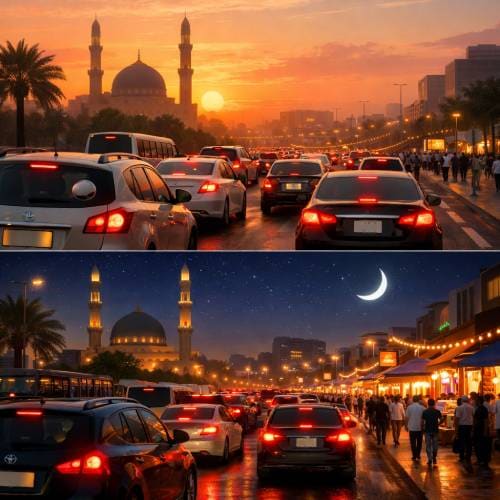
If you have meetings or flights near sunset, leave earlier than you normally would.
Ride-hailing apps operate normally, but wait times increase before Iftar.
#4. Dress Code
Dubai is cosmopolitan, but modesty is appreciated during Ramadan.
For both men and women:
- Avoid short shorts.
- Avoid revealing tops in malls and public areas.
- Keep beachwear restricted to beaches and pools.
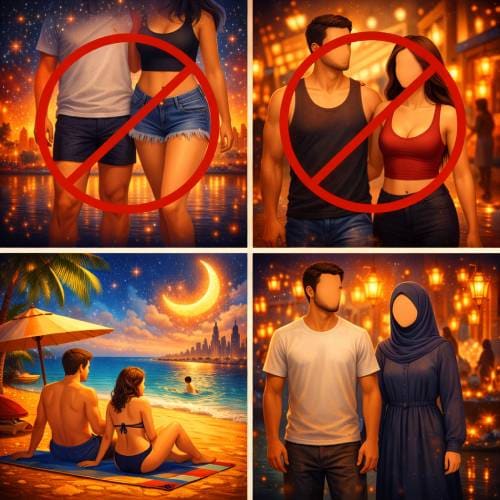
You do not need to change your entire wardrobe. Just lean slightly more conservative than usual.
#5. Nightlife and Entertainment
Ramadan is not a party month.
- Nightclubs typically pause operations.
- Live loud music in public venues is reduced.
- Alcohol service continues in licensed venues, mostly after sunset.
Instead, evenings focus on:
- Iftar buffets
- Suhoor tents
- Cultural performances
- Late-night shopping
Malls often stay open past midnight. Some cafés remain open until 2–3 AM.
#6. Are tourist attractions open in Dubai during Ramadan?
Yes. Most tourist attractions in Dubai remain open throughout Ramadan.
Major landmarks and venues such as:
- Burj Khalifa
- Dubai Mall
- Theme parks
- Desert safari operators
- Public and private beaches
… operate as usual. Though some may adjust opening hours slightly, often staying open later into the evening.
However, in traditional areas like souks and smaller local markets, some shops may:
- Open later in the morning
- Close briefly during prayer times
- Shut temporarily around sunset (Maghrib)
Timings can vary day to day.
Before heading out, it is advisable to:
- Check updated hours on Google Maps
- Visit the official website
- Call ahead for smaller attractions or markets
#7. General Etiquette
- Greet with “Ramadan Kareem” if appropriate.
- Avoid playing loud music in public during the day.
- Do not argue loudly in public spaces.
- Be patient at service counters.
Dubai does not expect visitors to behave like residents, but respect is appreciated.
#8. Have fun! Attend an Iftar
Enough about caution and delays. Do you know what you absolutely must do and have fun at if you are in Dubai during Ramadan? Join the festivities!
Even if you are not fasting, attending an Iftar is worthwhile.
Expect:
- Dates and Arabic coffee at sunset
- Large buffet spreads
- International and Middle Eastern dishes
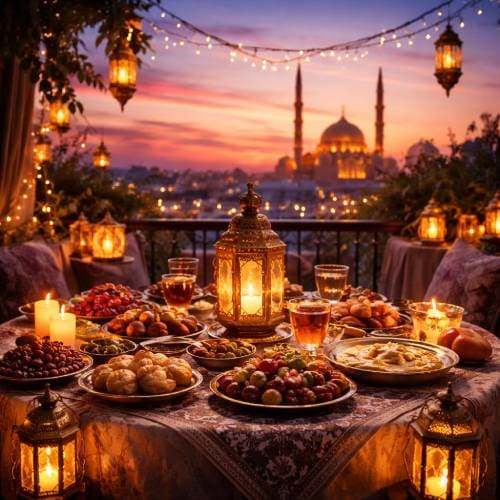
Prices ranging roughly from AED 150 to AED 350+ per person depending on venue
Luxury hotels and beachfront resorts offer elaborate Ramadan tents. Reservations are strongly recommended, especially on weekends.
What Makes Ramadan Special in Dubai
The city looks different.
- Mosques are illuminated.
- Streets feel calmer in the day.
- Nights are lively but family-oriented.
- Community charity initiatives increase.
There is a visible shift toward reflection and generosity.
For visitors, this is when Dubai feels less commercial and more cultural.