Oqood Dubai: Meaning, Registration, Certificate and Fees
Oqood is the Dubai Land Department's register for homes sold before they are built. The developer must register each sale within 90 days of the contract, or the sale is not valid under Dubai law. The fee is 4% of the price plus AED 20, and the buyer receives an Oqood certificate. At handover it becomes a title deed for AED 520.
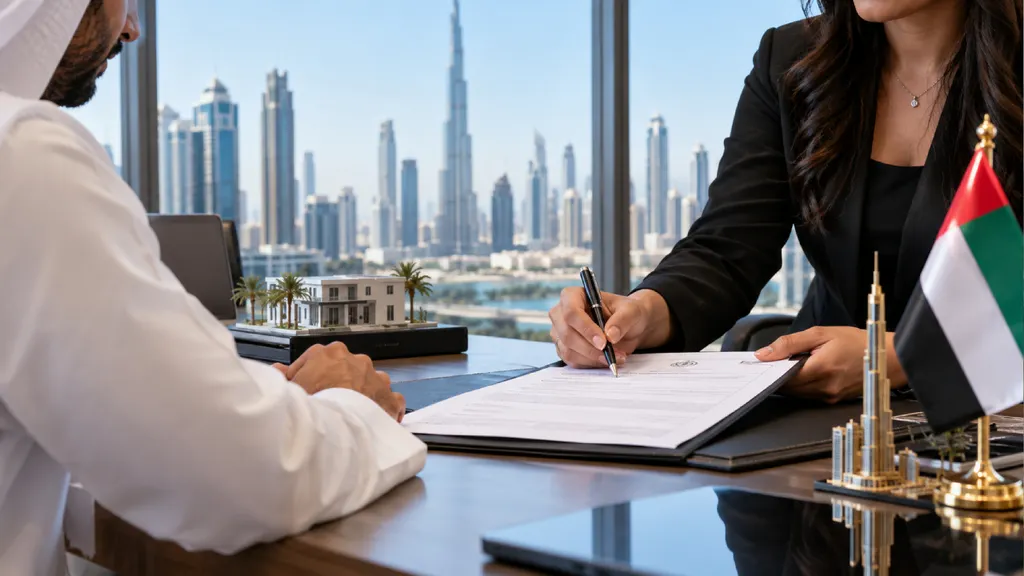
Oqood is the Dubai Land Department's register for homes that are sold before they are built. When you buy such a home, the developer records your purchase in this register. You then get an Oqood certificate, which is the official proof of your purchase.
Oqood matters because a home that is not built yet has no title deed. Until the building is finished, the Oqood registration is the only official record that you bought the home. Under Dubai law, a sale that is not in the register is not valid.
In September 2026 the Dubai Land Department gave developers a new online platform for this work. Nothing changed for buyers. This guide is for anyone buying a home in Dubai that is not built yet. It also tells owners, agents and developers' staff where the official service is.
Oqood
This guide first explains what Oqood is and where the official service is. It then covers registration, the Oqood fee, the certificate and the title deed. It ends with what you can do with an Oqood and how to fix problems.
The rules and fees in this guide come from the Dubai Land Department's own service pages and from Dubai law. We checked them on 10 October 2026. Developers set some charges and conditions themselves, so read your own contract too. This guide is general information, not legal advice.
What Is Oqood in Dubai?
Oqood is the system that the Dubai Land Department uses to register sales of homes that are not built yet. The Dubai Land Department is the government office that keeps Dubai's property records. Most people call it the DLD.
A home that is sold before it is built is called an off-plan home. The company that builds and sells it is called the developer. Our guide to off-plan property in Dubai explains this kind of purchase in full.
What the word Oqood means
Oqood is the Arabic word for contracts. The name fits, because the register is a list of sale contracts.
The official name of the register is the Interim Real Property Register. Interim means temporary. Your home stays in this register only until the building is finished. After that, it moves to the main Property Register and you get a title deed.
People also use the word Oqood for the certificate that the buyer receives.
Why Dubai has Oqood
Before 2008, an off-plan sale in Dubai was only a private contract between the buyer and the developer. No public record showed who had bought which home.
This caused real losses. In one case reported in 2021, buyers in a building in International City found that their flats were still in the developer's name. One buyer had bought a studio in 2005 and had finished paying in 2008. The flats were put up for auction to pay the developer's bank debts.
Dubai changed this with Law No. 13 of 2008. The law created the register, and it says that every off-plan sale must be entered in it. So today the government keeps a record of your purchase, not only the developer.
A simple example
Sara buys an apartment for AED 1 million in a tower that will be finished in two years. She signs the sale contract and pays the first instalment and the Oqood fee.
The developer registers her purchase with the DLD. A few weeks later, Sara receives her Oqood certificate by e-mail. The DLD's register now shows that Sara bought that apartment. When the tower is finished, the DLD replaces her Oqood with a title deed.
Where the official Oqood service is
The official Oqood service is on the Dubai Land Department's website. Its full name is Request to register the initial sale. That page lists the fees, the documents and the time limit.
The Oqood portal itself is for developers only. A developer logs in to the portal and registers each sale there. Buyers do not get an Oqood login.
If you are a buyer or an owner, you use two other DLD services:
- The Dubai REST app. This is the DLD's app for property owners. It shows your properties and information about your project.
- The DLD website. It has free tools to check a certificate and to check a project.
Oqood Registration: How It Works
The developer does the Oqood registration, and the DLD approves it. You cannot register the sale yourself. Your part is to sign the contract, pay, give your documents and then check the result.
The sale contract for an off-plan home is called the sale and purchase agreement. Most people call it the SPA. The registration starts when you sign it:
- You sign the SPA and pay. You pay the first instalment and the Oqood fee. Your instalments go into the project's escrow account, which is a protected bank account for the project.
- You give your documents. The DLD asks for the signed SPA and your Emirates ID. If you live outside the UAE, it asks for your passport.
- The developer applies on the Oqood portal. The developer enters your details, uploads the documents and pays the DLD's fee.
- The DLD processes the application. The DLD says this takes one working day.
- You receive the Oqood certificate. The DLD's system sends it to your e-mail address.
Give the developer an e-mail address that you check often, because the certificate goes to that address.
The 90-day rule for Oqood registration
The developer must register your sale within 90 days of the day you sign the SPA. This rule is on the DLD's service page.
In practice, many registrations take only a few weeks. But if you have no certificate after 90 days, the developer is outside the DLD's time limit. A later section of this guide explains what to do then.
Our guide on how to buy off-plan property in Dubai shows where registration fits in the whole purchase.
Oqood Fees
The Oqood fee is 4% of the price of the home, plus AED 20. The DLD charges it once, when the sale is registered. Some developers also add their own charges.
This table shows each charge and who pays it:
| Charge | Amount | Who pays |
|---|---|---|
| DLD registration fee | 4% of the price | The buyer, in most contracts |
| DLD knowledge fee and innovation fee | AED 20 in total | The buyer |
| DLD fee for the developer's registration | AED 1,000 | The developer. Some developers pass it to the buyer |
| Developer's own administration charge | Often about AED 580 to AED 4,000 | The buyer, if the contract says so |
Who pays the Oqood fee
The buyer pays the 4% in most off-plan sales. The DLD's own fee list divides the 4% into two halves, 2% for the seller and 2% for the buyer. But Dubai's rules allow the two sides to agree something different, and most off-plan contracts say the buyer pays all of it.
You pay the fee to the developer, and the developer pays it to the DLD. So keep the receipt.
An example at AED 1 million
A buyer signs for an apartment that costs AED 1 million:
- The DLD registration fee is 4% of AED 1 million, which is AED 40,000.
- The knowledge fee and innovation fee add AED 20.
- The Oqood fee is AED 40,020.
If the developer also passes on its AED 1,000 fee, the total is AED 41,020. Any administration charge from the developer is extra.
Three more things to know about the Oqood fee
You pay the fee in cash. Since February 2025, banks in the UAE do not add property fees to a home loan. So you need the 4% in savings.
You pay the fee at the start, not at handover. The DLD takes the fee when the sale is registered. You do not pay 4% again when you get the title deed.
Ask the developer to list every charge. Dubai law lets a developer add only administration costs that the DLD has approved. The DLD does not publish a list of approved amounts. So ask the developer to name each charge in writing before you pay.
Our guide to DLD fees explains every fee the DLD charges.
Oqood Certificate: How to Get It and Check It
The Oqood certificate is the document that proves your purchase is registered. Its official name is the provisional registration e-certificate. It is a digital document, not a paper one.
How to get your Oqood certificate
You do not apply for the certificate. The DLD's system sends it to your e-mail address after the developer registers the sale. So getting it is mostly a matter of following up:
- Ask for a date. When you sign the SPA, ask the developer when it will register the sale.
- Watch your e-mail. Look in your junk folder too.
- Ask again after a month. If nothing has arrived, ask the developer in writing for the registration date.
- Save the certificate. You need it until you get the title deed.
What the Oqood certificate shows
The certificate shows the main facts of your purchase. Read each one and compare it with your SPA and your passport:
- your full name, spelled as in your passport
- your passport number or Emirates ID number
- the name of every buyer, if you are buying with another person
- the project, the building and the unit number
- the price
- the developer's name
How to check your Oqood
Do not rely only on the PDF. You can check the registration yourself with the DLD's own tools. These checks are free and take a few minutes:
- Open the Dubai REST app and log in. The app shows the properties that are registered in your name. For an off-plan home, it also shows how much of the building is finished. You can see the escrow account number and the payments you owe.
- Check the certificate on the DLD website. The service is called Verify Title Deed. It is also inside Dubai REST. You enter the number on your certificate, and the result appears at once.
- Check the project. Use the DLD's Project Status Enquiry service, on the website or in the app. Search for your project by name.
One point about step 2 is not certain. The DLD's page for this service mentions title deeds only. Property websites report that it also accepts the number on an Oqood certificate. If it does not accept your number, use step 1 and ask the DLD to confirm your registration.
What a correct Oqood check looks like
This table shows the result you want from each check, and what to do if you get a different result:
| What you check | A correct result | If the result is different |
|---|---|---|
| Your certificate | Every detail matches your SPA and your passport | Ask the developer in writing to correct it |
| Dubai REST | Your home appears under your name | Ask the developer for the certificate number, then ask the DLD |
| Verify Title Deed | The certificate shows as valid | Ask the DLD what the result means before you pay more |
| Project Status Enquiry | The project shows as Active, with an escrow bank named | Ask the developer and the DLD why |
Do these checks on the day the certificate arrives. Do them again before you make a large payment. If you live abroad and cannot log in to Dubai REST, use the website services.
Oqood vs Title Deed
An Oqood and a title deed do the same job at different times. The Oqood is for a home that is still being built. The title deed is for a finished home. You never hold both for the same home.
This table shows the main differences:
| Point | Oqood | Title deed |
|---|---|---|
| When you hold it | While the home is being built | After the home is finished |
| Which register | The interim register | The main Property Register |
| What it proves | You bought the home, and the DLD has recorded the sale | You own a finished home |
| DLD fee | 4% of the price, plus AED 20 | AED 520, if you already paid the 4% |
| Can you sell? | Yes, with the developer's permission | Yes |
| Can you get a home loan? | Yes, for up to 50% of the price | Yes. A resident can borrow up to 80% for a first home |
| Two-year property visa | No | Yes, if you meet the visa rules |
When an Oqood becomes a title deed
An Oqood becomes a title deed at handover. Handover is the day the developer gives you the finished home.
Two things must be true first. The building must be complete, and you must have paid everything that your contract requires by that date. The last section of this guide explains the steps and the fee.
What You Can Do With an Oqood
You can do two important things with a registered Oqood: sell the home and borrow against it. Both need the developer's agreement. A residence visa usually needs a title deed.
Selling a home that is on Oqood
What is confirmed. Dubai law allows you to sell an off-plan home once it is in the register. The DLD also requires a letter from the developer that allows the sale. This letter is called a no-objection certificate, or NOC.
What you must ask. Each developer sets its own conditions for the NOC, and they are written in your SPA. Many developers ask you to pay 30% to 40% of the price first. Some ask for more. The developer also charges a fee for the NOC.
So read these two conditions before you buy. The DLD also charges its registration fee again on the new sale, and it issues a new Oqood in the new buyer's name.
Getting a mortgage on a home that is on Oqood
What is confirmed. A bank can register a home loan on a home that is on Oqood. The Central Bank of the UAE limits the loan to 50% of the price of an off-plan home. The DLD charges 0.25% of the loan to register it, and the registration office adds a service fee of AED 5,000 plus VAT. The developer must also give a no-objection certificate.
What you must ask. Not every bank lends on every project. Ask the bank whether it lends on your project, and at what stage of the building work. Our guide to a mortgage in Dubai explains the loan rules.
Applying for a visa with an Oqood
What is confirmed. You cannot get the two-year property visa with an Oqood alone. The DLD's visa service asks for a completed property and a title deed. It does not matter how much you have paid.
What you must ask. The rules for the 10-year Golden Visa are less clear for a home that is still on Oqood. Ask a DLD service centre to confirm in writing before you rely on it. Our guides to the Dubai property visa and the Golden Visa through property give the details.
If the Developer Has Not Registered Your Oqood
If the developer has not registered your sale, you are not yet protected by the register. Act on this early. It is much easier to fix in the first months than after a project runs into trouble.
Why an unregistered sale is a serious problem
The law that created the register says that a sale outside the register is void. Void means that the law treats the sale as if it never happened. These are the exact words of Article 3:
“"Any sale or any other legal disposition that transfers or restricts ownership or any ancillary rights will be void unless entered in that Register."”
Dubai Law No. 13 of 2008, Article 3
A receipt is not a registration
A receipt for the 4% fee shows only that you paid the developer. It does not show that the developer registered your sale. Only an Oqood certificate that you have checked with the DLD shows that.
Two real cases
Marina 101, Dubai Marina. This tower stopped at 97% complete when the developer ran out of money. In October 2019, the head of Dubai's property regulator said that buyers with a registered Oqood would receive their homes when the tower was finished. Buyers without an Oqood had no such promise. In July 2021, Gulf News counted more than 50 buyers who had no Oqood certificate. One of them had bought a penthouse for AED 30 million.
A court case in 2009. A buyer went to court because the developer had not registered the sale in time. The Dubai court treated the sale as void, and it ordered the developer to pay back AED 7.4 million. The appeal court agreed later that year.
These cases show two things. A registered buyer is in a much stronger position when a project fails. When a sale is void, the usual result is a claim for your money, not the home.
What to do if your Oqood is not registered
Follow these steps in order:
- Ask the developer in writing. Ask for the registration date and the certificate number. Send an e-mail, so that you have a record.
- Check for yourself. Look for your home in Dubai REST. The certificate may exist even if the e-mail did not reach you.
- Count the days. The developer has 90 days from the day you signed the SPA.
- Apply to the DLD after 90 days. The DLD says you can apply to its Real Estate Registration Assurance section. Take your SPA and your proof of payment.
- Get legal advice before you stop paying. If you miss an instalment, you may break your own contract. So speak to a property lawyer first.
- Go to court if nothing else works. The DLD cannot cancel a sale contract for a buyer. Only Dubai's real estate court can do that.
Some developers say they register a sale only after the buyer has paid a set share of the price. The DLD's rule has no such condition. The 90 days start on the day you sign, whatever you have paid.
Mistakes on an Oqood and How to Fix Them
A mistake on your Oqood will not correct itself, and it can delay your title deed at handover. So fix it as soon as you see it.
These are the mistakes to look for:
- a name that is spelled differently from your passport
- an old or wrong passport number
- a missing co-buyer, or the wrong share for each buyer
- the wrong unit number or the wrong price
To fix a mistake, write to the developer. Send a copy of the correct document, and ask for a corrected certificate. The developer makes the change, because only the developer can use the Oqood portal. The DLD's website lists no service that lets a buyer correct an Oqood directly.
When the new certificate arrives, check it again.
Adding or removing a person is not a correction. It is a change of ownership, so it can need the developer's permission and a DLD fee. It is simpler and cheaper to put every buyer's name on the SPA at the start.
From Oqood to Title Deed at Handover
At handover, the developer asks the DLD to change your Oqood into a title deed. You do not apply yourself. The DLD does this for buyers who have met the conditions of their contract.
This is what happens:
- The developer finishes the building and gets its completion certificate.
- You pay the amounts that are due at handover under your SPA.
- The developer applies to the DLD through the Oqood portal.
- The DLD issues your title deed. The DLD says this takes six working days.
The fee for changing an Oqood into a title deed
The DLD's fees are AED 520 in total if you paid the 4% when the sale was registered. That is AED 250 for the title deed, AED 250 for the map of the unit, and AED 20 in small fees.
If you still owe money after handover
Some payment plans continue after handover. With such a plan, you move in before you have paid the full price. The home is then usually registered in your name with a restriction until you pay the last instalment. You may not be able to sell it freely during that time.
Ask the developer what you will receive at handover, and ask before you sign. Our guide to the post-handover payment plan in Dubai explains this.
If the developer does not transfer the home
If you have met all the conditions of your contract, the developer cannot refuse to register the home in your name. The law also allows the DLD to register the home in your name itself.
FAQs
Does an Oqood certificate expire?
The DLD's service page gives no expiry date. The registration stays in place until the home gets a title deed, until you sell it, or until the contract ends.
I lost my Oqood certificate. How do I get a copy?
Search your e-mail first, because the DLD's system sent the certificate there. If you cannot find it, ask the developer for a copy. The DLD's website lists no service for a buyer to download it again.
Can a company be the buyer on an Oqood?
Yes. The DLD registers off-plan sales to companies. It asks for the trade licence, the licence holder's ID and the company's documents.
What happens to my Oqood if the project is cancelled?
If Dubai's property regulator cancels a project, buyers are paid back from the money in the project's escrow account. The DLD says buyers receive their money in full or in part, depending on how much is left.
Do I lose my Oqood if I miss an instalment?
Not at once. The developer must tell the DLD, and the DLD gives you 30 days' notice to pay. After that, the developer can end the contract and keep 25% to 40% of the home's value. The share depends on how much of the building is finished.
Sources and method24 sources from 9 publishers · last checked 10 October 2026
Official
- Dubai Land Department Request to register the initial saleRequest to complete the initial procedures dataVerify Title DeedDubai RESTProject Status EnquiryMortgage registrationFrequently asked questions
- Dubai Legislation Portal Law No. (13) of 2008 Regulating the Interim Property RegisterLaw No. (19) of 2020 amending Law No. (13) of 2008Executive Council Resolution No. (6) of 2010Executive Council Resolution No. (30) of 2013
- Dubai Media Office Dubai Land Department launches Initial Registration
- Central Bank of the UAE Regulations Regarding Mortgage Loans
Reporting and other sources
- DLD Cube Residency of a property owner for two years
- Gulf News Dubai Marina 101 tower investors to get units soonSome property buyers in stalled skyscraper projectPaying all dues does not guarantee ownershipDubai developers urged to stop delaying property sales registrationBuying an off-plan property in Dubai
- The National Registering off-plan transactions in DubaiUAE banks stop financing DLD fees and commission
- DLA Piper Deferred sale and purchase agreements in Dubai
- Binghatti How to sell off-plan property in DubaiOqood certificate guide