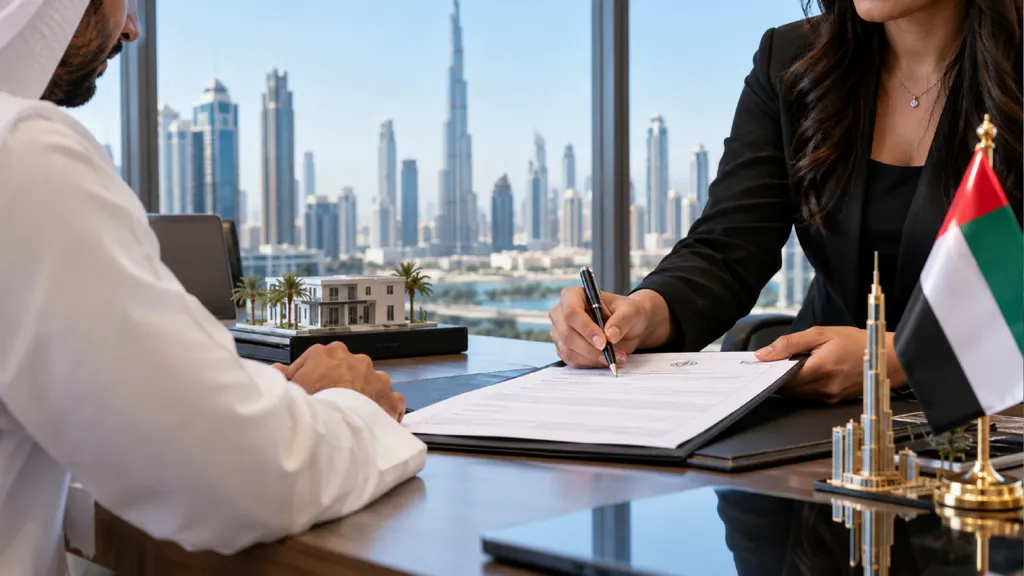
Buying Off-Plan in Dubai 2026: Process, Costs and Risks
Buying off-plan in Dubai means booking a home with 10% to 20% of the price, paying a 4% Dubai Land Department fee, and receiving an Oqood certificate as proof of purchase. All payments go into the project's escrow account. Building usually takes two to four years, and the title deed is issued when the home is finished and paid for.

Buying off-plan in Dubai means buying a home that is not built yet. You buy it from the developer, which is the company that builds it. You pay in stages while the building goes up, and you get the keys when it is finished.
This matters because you pay a lot of money before you can see the home. So the order of the steps is important. If you check the project first, sign the right contract and pay into the right account, Dubai's law protects your money.
In 2026, about three in every four homes sold in Dubai are off-plan. Many projects also finish later than the date in the advert. This guide explains what happens at each step, in order. It is for UAE nationals, residents and people who live abroad.
Buying Off-Plan in Dubai
This guide first shows all the steps to buy off-plan property in Dubai in one list. It then explains each step: what you do, what you pay, who you pay and what you sign. After that it covers the total cost, buying from abroad and the mistakes to avoid.
The rules and fees in this guide come from Dubai's property laws and from the Dubai Land Department's website. We checked them on 7 October 2026. Developers set their own deposits and payment plans, so always read your own contract. This guide is general information, not legal or financial advice.
How to Buy Off-Plan Property in Dubai: The Steps
You buy off-plan property in Dubai in eight steps. The first five take a few weeks. The last three take as long as the building work. Follow them in this order:
- Choose a project and check it. Use the Dubai Land Department's free service to check the project and the developer.
- Book the home. You sign a booking form and pay a deposit, usually 10% to 20% of the price.
- Read and sign the sale contract. This contract is called the SPA.
- Pay into the project's escrow account. Every payment for the home goes into this protected bank account.
- Register the sale. You pay a 4% fee and receive the Oqood certificate.
- Pay the instalments. You pay the rest in stages while the home is built.
- Take handover. You pay the final amount, inspect the home and collect the keys.
- Get the title deed. The home is now fully yours.
The sections below explain each step. Step 7 in this guide covers the handover and the title deed together.
If you are still deciding whether to buy off-plan, start with our guide to off-plan property in Dubai.
Step 1: Choose an Off-Plan Project and Check the Developer
Before you pay anything, check that the project is registered with the Dubai Land Department. The Dubai Land Department is the government office that records every property sale in Dubai. People call it the DLD.
A developer must register a project with the DLD before it sells homes in it. So a registered project is the first sign that your money will be protected.
Who can buy off-plan property in Dubai
You do not need to live in the UAE to buy. UAE nationals and nationals of other Gulf countries can buy anywhere in Dubai. All other buyers can buy in the areas that Dubai has opened to foreign owners. These are called freehold areas, and most off-plan property for sale in Dubai is in them.
The free checks on the Dubai Land Department service
The DLD has a free service called Project Status Enquiry. You can use it on the DLD website or in the Dubai REST app, which is the DLD's own mobile app. You type the name of the project, and the result appears at once.
This table shows what a good result looks like, and what to do if you see something else.
| What you see | What it means | What to do |
|---|---|---|
| The project appears, and its status is "Active" | The project is registered and the DLD follows its progress | Write down the completion percentage |
| An "Escrow Account" section with a bank name and account number | This is the only account your money should go to | Save a screenshot. You will need it in Step 4 |
| The project does not appear | The project is not registered yet | Do not pay anything, even a small booking amount |
Then check the developer's name in the DLD's list of licensed developers. The list is on the DLD website and in the Dubai REST app.
This check matters because some projects are advertised before they are registered. In June 2024, the DLD fined three developers AED 500,000 each for doing this.
Step 2: Book the Off-Plan Home and Pay the Reservation
To book an off-plan home, you sign a booking form and pay a reservation deposit. The deposit is usually 10% to 20% of the price.
On a home that costs AED 1.5 million, that deposit is AED 150,000 to AED 300,000. You often pay it on the day the developer starts selling.
What an expression of interest is
Some developers ask for money before the sale even starts. This is called an expression of interest, or EOI. It gives you an early place in the queue, but it does not promise you a home or a price.
An EOI is often AED 20,000 to AED 50,000. When you book, the developer counts it as part of your deposit.
We found no public Dubai rule that protects an EOI payment. So before you pay, check that the developer's form says you get all the money back if you do not book.
What the booking form means for you
The booking form is a binding document. Most forms say that the deposit is not refundable. Many also give you only about five working days to sign the full sale contract. If you do not sign in time, the developer can keep your deposit.
We found no rule in Dubai that lets you cancel a booking within a few days and get your money back. So you must read the documents before you pay.
What to get in writing before you pay
Ask the developer to email you these four things before the booking day:
- The draft sale contract, so that you have time to read it.
- The disclosure statement. The developer must give you this written summary before you sign. It covers the finishes, the estimated service charges and the estimated handover date.
- The payment plan, with every amount and date.
- The escrow account details, so that you can compare them with your screenshot from Step 1.
Also ask for one sentence on the booking form. It should say that you get the deposit back if the final contract is different from the draft.
Step 3: Read and Sign the Off-Plan Sale Contract
The sale contract for an off-plan home is called the sale and purchase agreement, or SPA. The DLD registers this contract in Step 5.
The developer's lawyers write the SPA, and developers rarely change it for one buyer. So read it before you pay the deposit, while you can still say no.
The clauses that matter in an off-plan SPA
An SPA is long, but four clauses decide most of what happens to you. This table shows what each clause usually says and why it matters.
| Clause | What it usually says | Why it matters |
|---|---|---|
| Completion date | It gives an "anticipated" date. The developer can extend that date, often by 12 months | The later date is the real deadline. Plan your money and your housing around it |
| Size of the home | The size can change a little when the home is built | The law gives you compensation only if the inside area is more than 5% smaller |
| Payment plan | It lists each instalment, its due date and the charge for paying late | Late charges start on the due date, even if your bank transfer is slow |
| If you stop paying | The developer can end the contract and keep part of the price | The law limits the amount, but the limit is high |
Here is what the size rule means. On a home of 900 square feet, 5% is 45 square feet. So the finished home can be up to 45 square feet smaller, and the developer owes you nothing.
What the law says if you stop paying
Dubai's law sets the most a developer can keep if you stop paying. The limit depends on how much of the project is built:
- Less than 60% built: the developer can keep up to 25% of the price of the home.
- 60% built or more: the developer can keep up to 40% of the price of the home.
The percentage is counted on the full price. The amount you have paid so far does not change it. Here is an example with a home that costs AED 1.5 million.
| What happened | The most the developer can keep | What you get back |
|---|---|---|
| You paid AED 450,000 and stopped when the project was 50% built | AED 375,000 | AED 75,000 |
| You paid AED 450,000 and stopped when the project was 65% built | AED 600,000 | Nothing |
In the second case, the limit is higher than everything the buyer paid. So the buyer can lose the whole AED 450,000.
The developer must first tell the DLD, and the DLD gives you 30 days' notice to pay. Even so, sign a payment plan only if you can pay every instalment from your own money.
You can pay a lawyer to read the SPA before you sign. Our guide to conveyancing in Dubai explains who does this work.
Step 4: Pay Into the Project's Escrow Account
An escrow account is a protected bank account for one building project. The bank lets the developer use the money only to build that project.
Every payment for the price of your home must go into this account. This includes the booking deposit, every instalment and the final payment.
How to check the escrow account
Check the account every time you pay. The account details should be the same in three places:
- the DLD's Project Status Enquiry result, which you saved in Step 1
- your sale contract
- the payment request that the developer sends you
If one of the three is different, do not pay.
Never pay anyone else
Your agent cannot take the money for you. The law says so.
“A broker "may not deposit the price into his own account or deduct his commission".”
Executive Council Resolution No. 6 of 2010, Article 12
Stop if someone asks you to pay another way
Do not pay in cash. Do not pay into an agent's account or a personal account, even for a discount. Money outside the escrow account does not have this protection.
Keep the bank's confirmation and the developer's receipt for every payment. Our guide to escrow accounts in Dubai explains how the bank releases the money to the builder.
Step 5: Register the Sale (Oqood) and Pay the 4% Fee
Oqood is the DLD's register for homes that are sold before they are built. When your sale is entered in it, the government has a record that you are the buyer.
Dubai's Law No. 13 of 2008 says an off-plan sale "will be void unless entered in that Register". Void means the sale has no legal effect.
Who registers the sale, and when
The developer registers the sale for you. It sends the DLD a copy of your signed SPA and your Emirates ID, or your passport if you live abroad.
The contract must be registered within 90 days of the day you sign it. When the developer applies, the DLD issues the certificate in about one working day.
What you pay
You pay the registration fee to the developer, and the developer pays the DLD. The fee is 4% of the price plus AED 20. Many developers also pass on a DLD charge of AED 1,000.
On a home that costs AED 1.5 million, you pay AED 60,020, or AED 61,020 with the extra charge.
You must pay this fee from your own money. Since February 2025, banks in the UAE no longer add buying fees to a home loan. Our guide to DLD fees explains every fee.
What proof you get
The DLD emails you a document called the provisional registration e-certificate. Most people call it the Oqood certificate.
The developer's receipt for the 4% fee is a different thing. A receipt shows that you paid the developer. Only the certificate shows that the sale is registered.
If the certificate has not arrived 30 days after you paid, ask the developer for the date it applied. If you get no clear answer, you can complain to the DLD with your SPA and your payment proof.
Our guide to Oqood in Dubai explains the certificate in detail.
Step 6: Pay the Instalments While the Home Is Built
After registration, you pay the rest of the price in instalments. A common plan is called 60/40. You pay 60% of the price while the home is built, and 40% when it is finished. Our guide to off-plan payment plans in Dubai compares the plans.
How to follow the building progress
You can follow your project in the Dubai REST app. The app shows the percentage that is complete, real photos of the site and the payments you still owe.
Some plans link each instalment to a building stage. With these plans, you can ask for a letter from the project's consultant that confirms the stage is finished. The DLD says you do not have to pay that instalment until the stage is confirmed.
What to do if building is late
Late handover is common. In 2025, about 40,400 homes were finished in Dubai, but about 82,600 had been scheduled. So only about half arrived in the year that was planned.
Your contract allows some delay, because it lets the developer extend the date. If the delay goes beyond that, follow these steps:
- Ask the developer in writing for the new completion date.
- Keep paying while you get legal advice. If you simply stop, the developer can use the rule in Step 3 against you.
- Go to court if you want to cancel. The DLD "does not have the authority to terminate any contract" for a buyer. Only the court can do that.
Courts do rule for buyers. In January 2026, the court cancelled the sale of a late home priced at AED 1.72 million. It ordered the developer to return the AED 516,872 the buyer had paid, plus AED 100,000 in compensation.
Our guide to filing a RERA complaint against a developer also explains court claims.
Step 7: Handover, Snagging and the Title Deed
Handover is the day you receive the keys. It starts when the developer sends you a completion notice. This notice says the building is finished and gives you a deadline to pay the final amount.
The final payment
The final payment is usually your largest. On a 60/40 plan for a home that costs AED 1.5 million, it is AED 600,000.
Prepare this money early, because the contract adds late charges after the deadline. You can use a home loan for this payment. Our mortgage in Dubai guide explains the rules.
Snagging: the checks before you accept the keys
Snagging means inspecting the new home for faults before you accept it. Do it before you sign the handover form. You can pay an independent inspector to help. Check these things:
- Water: every tap, shower, toilet and drain
- Electricity: every light, switch and socket
- Air conditioning: cooling in every room
- Doors, windows and surfaces: locks, tiles, paint and cupboards
- Size and finishes: compare them with the list in your contract
Give the developer a written list of the faults, and ask for a repair date for each one.
The law also protects you after handover. The developer must repair faulty fittings, such as plumbing and electrics, for one year from your handover. The developer is responsible for faults in the structure for ten years from the date the building was completed.
At handover you also start to pay service charges, which pay for running the building. You pay a refundable deposit to DEWA, the electricity and water company, too.
Getting the title deed
The title deed is the official document that says you own the home. After handover, the developer asks the DLD to change your Oqood registration into a title deed.
The DLD charges AED 520 for the title deed, and it takes about six working days. You do not pay the 4% fee again.
The DLD issues the title deed only to buyers who have paid everything the contract requires. So if your plan has instalments after handover, you will not have a full title deed until you pay the last one. Our guide to post-handover payment plans explains this.
What It Costs to Buy Off-Plan in Dubai
Buying off-plan in Dubai costs the price of the home plus about 4% in government fees. This table shows what a buyer pays, and when, for a home that costs AED 1.5 million. The buyer pays 20% at booking and has a 60/40 payment plan.
| When you pay | What you pay | Amount |
|---|---|---|
| Booking day | Reservation deposit, 20% of the price | AED 300,000 |
| Within a few weeks | DLD registration fee, 4% of the price plus AED 20 | AED 60,020 |
| Within a few weeks | DLD charge of AED 1,000, if the developer passes it on | AED 1,000 |
| During building | Instalments, 40% of the price | AED 600,000 |
| Handover | Final payment, 40% of the price | AED 600,000 |
| After handover | Title deed | AED 520 |
| Total | The price plus AED 61,540 in fees | AED 1,561,540 |
So this buyer needs about AED 361,000 in the first weeks. That is the deposit plus the registration fee.
The table leaves out the costs that change from home to home. These are the service charges, the utility deposits and an inspection fee. Ask the developer for these amounts in writing before you sign the SPA.
Buying Off-Plan in Dubai From Abroad
You can buy off-plan in Dubai without travelling there. People who live abroad follow the same steps and pay the same fees. Three things work differently:
- The checks. The DLD's Project Status Enquiry works from any country. Do the check yourself, and do not rely on a screenshot from an agent.
- The payments. You pay by international bank transfer into the escrow account. Send each payment a few days early.
- The handover. Someone must inspect the home and collect the keys. If you cannot come, you can give another person a power of attorney.
A power of attorney is a legal document that lets someone act for you. If you sign it outside the UAE, it needs official stamps in your country and in the UAE. So start early.
Our guide to buying property in Dubai from the UK explains these steps for UK buyers.
Mistakes to Avoid When Buying Off-Plan in Dubai
Most problems come from paying before checking. This table shows the common mistakes, what happens next and how to avoid each one.
| Mistake | What happens | How to avoid it |
|---|---|---|
| You pay a deposit for a project that is not registered | No escrow account exists, so nothing protects your money | Use the DLD's Project Status Enquiry before any payment |
| You pay the deposit before you read the SPA | You find a clause you cannot accept, and the form says the deposit is not refundable | Get the draft SPA by email before the booking day |
| You pay an agent or pay in cash | The money is outside escrow, and the developer may not count it | Pay only into the escrow account shown by the DLD |
| You do not check for the Oqood certificate | An unregistered sale has no legal effect | Ask for the certificate 30 days after you pay |
| You stop paying because the building is late | The developer can end the contract and keep up to 40% of the price | Get legal advice first, and use the court |
A real case: the buyer who stopped paying
This case from the Dubai real estate court shows why the fifth mistake is serious.
An investor bought a home in 2017. The contract promised handover by December 2019 at the latest. The project was finished in February 2023, more than three years late.
The buyer had stopped paying. So the developer ended the contract and kept 40% of the price. The buyer went to court.
In February 2026, the court reduced that amount to 10% and ordered the developer to return AED 185,000. The buyer won, but the answer came nine years after the purchase. So get legal advice before you stop paying, not after.
For the wider picture, read our main guide to buying property in Dubai.
FAQs
How long does buying off-plan in Dubai take?
The paperwork takes a few weeks. Building then usually takes two to four years.
Can I get a mortgage for an off-plan property in Dubai?
Yes, at some banks. The Central Bank of the UAE limits an off-plan loan to 50% of the price, so you must pay the other half yourself.
Can I sell an off-plan property before it is finished?
Usually yes, but only as your contract allows. Most developers want you to pay a set share of the price first, and you need the developer's written permission.
What happens if an off-plan project in Dubai is cancelled?
If the government regulator cancels the project, the law says buyers must be refunded. The money comes from the escrow account first, in full or in part. This can take a long time.
Do I pay an estate agent when I buy off-plan from a developer?
Normally no. The developer pays the agent's commission on a new off-plan sale. The agent is paid when you sign, so do the checks in this guide yourself.
Sources and method22 sources from 10 publishers · last checked 7 October 2026
Official
- Dubai Land Department Project Status EnquiryLicensed DevelopersDubai RESTRequest to register the initial saleRequest to complete the initial procedures dataFrequently asked questions
- Dubai Legislation Portal Law No. 8 of 2007 on escrow accountsLaw No. 13 of 2008 on the interim property registerLaw No. 19 of 2020 amending Law No. 13 of 2008Executive Council Resolution No. 6 of 2010Law No. 6 of 2019 on jointly owned property
- Central Bank of the UAE Regulations Regarding Mortgage Loans
Reporting and other sources
- Charles Russell Speechlys How binding is an off-the-plan reservation agreement in the UAE?
- Afridi & Angell Key clauses in sale and purchase agreements for off-plan properties in Dubai
- BSA Law Off-plan property delays in UAE: know your legal rights as a buyer
- Binghatti EOI meaning in Dubai real estate
- Gulf News Dubai Land Department fines three developers Dh1.5mDeveloper ordered to refund Dh516,872 after Riviera project delayDubai court orders developer to refund Dh185,000 to investor over construction delaysDubai homebuyers get more choice as 24,800 new units enter the market
- Khaleej Times Why are most of Dubai's off-plan property owners holding onto their assets?
- The National UAE property mortgages: fees