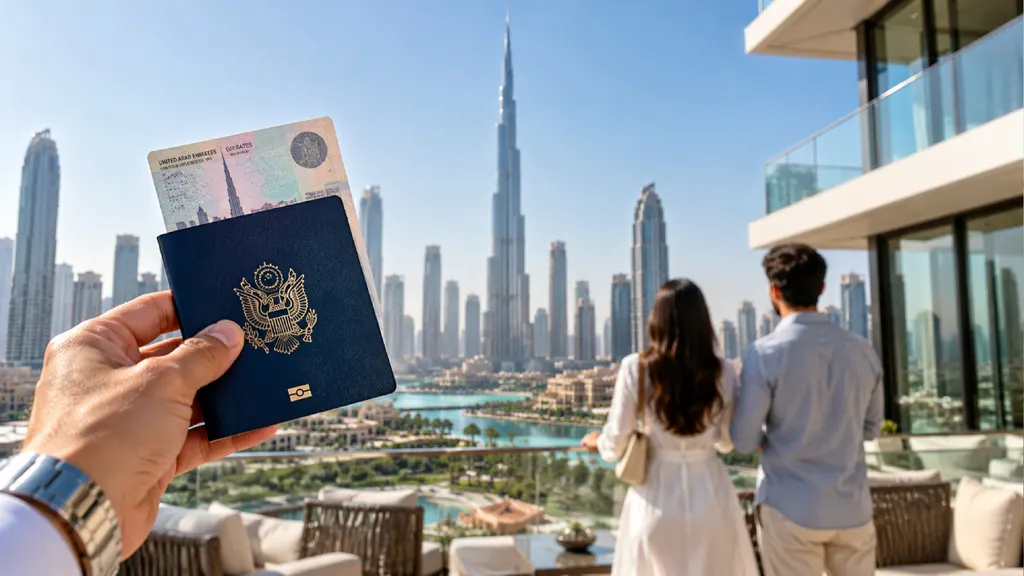
Can Foreigners Buy Property in Dubai? 2026 Rules Explained
Yes. Foreigners of any nationality can buy property in Dubai and own it outright in designated freehold areas, under Dubai Law No. 7 of 2006. No residence visa is needed, only a valid passport. Buying does not give a visa automatically, but owners can apply for a 2-year property visa or, from AED 2 million, a 10-year Golden Visa.

Yes, foreigners can buy property in Dubai. Dubai Law No. 7 of 2006 on real property registration lets non-UAE nationals own property outright (freehold) in areas designated by the Ruler, or hold a lease of up to 99 years there. Any nationality can buy, you do not need to live in the UAE, and the Dubai Land Department registers the title deed in your name.
Rules checked against Dubai Law No. 7 of 2006 and Regulation No. 3 of 2006 on the Dubai Legislation Portal, the Dubai Land Department's e-service pages and u.ae on 30 September 2026.
For the whole process from search to keys, start with our complete guide to buying property in Dubai.
Can foreigners own 100% of a property in Dubai?
Yes, foreigners can own 100% of a property in Dubai's freehold areas. Freehold means you own the unit (and, for a villa, the land) with no time limit, you can sell it, rent it out, mortgage it or leave it to your heirs, and the Dubai Land Department (DLD) issues the title deed in your name. There is no requirement for a local partner or sponsor.
The rule comes from Article 4 of Dubai Law No. 7 of 2006. It starts by reserving ownership for UAE and GCC nationals, then opens designated areas to everyone else.
“"Subject to the approval of the Ruler, non-UAE nationals may, in certain areas determined by the Ruler, be granted the following rights: a. Freehold ownership of Real Property without time restrictions; and b. Usufruct or leasehold over Real Property for a period not exceeding ninety-nine (99) years."”
Dubai Law No. 7 of 2006, Article 4
Where can foreigners buy property in Dubai?
Foreigners can buy only in designated freehold areas. The first list, Regulation No. 3 of 2006, named 23 areas, including Dubai Marina, Palm Jumeirah, Emirates Hills, Jebel Ali, Al Barsha South, Sheikh Zayed Road, Al Jaddaf and The World Islands, and later decisions have added more. Well-known freehold communities today include Downtown Dubai, Business Bay, Jumeirah Lake Towers, Jumeirah Village Circle, Dubai Hills Estate and Arabian Ranches.
The full, current list with a map is in our guide to freehold areas in Dubai. Before you pay anything, you can confirm a specific unit's status through the DLD's Dubai REST app or with a RERA-licensed agent.
Which popular areas are not freehold?
Several of Dubai's oldest and best-known districts are not freehold, so foreigners cannot buy there. Deira, Bur Dubai, Karama, Satwa, Oud Metha and Al Qusais are mainly reserved for UAE and GCC nationals, according to Bayut's and Driven Properties' lists of non-freehold areas.
Old Jumeirah (Jumeira 1, 2 and 3) and Umm Suqeim, the beach-side villa districts, are also mainly non-freehold, with a few freehold projects inside them. The name causes confusion: Jumeirah Beach Residence, Jumeirah Lake Towers, Jumeirah Village Circle and Jumeirah Golf Estates are separate communities, and all of them are freehold.
Check the plot, not the district
Freehold status belongs to the plot, not the neighbourhood name. A few new projects sit inside mostly non-freehold districts, and the reverse happens too. Ask the agent for the title deed or Oqood number and check it with the DLD before signing Form F.
What is the difference between freehold and leasehold for foreigners?
Freehold gives a foreign buyer permanent ownership, while leasehold (or usufruct) gives the right to use a property for a fixed term of up to 99 years. Both rights are registered with the DLD, and Law No. 7 of 2006 allows foreigners to hold either one, but only in the areas the Ruler has designated.
| Right | How long | What you own | Can you sell or mortgage it? |
|---|---|---|---|
| Freehold | No time limit | The unit, a share of the common areas and, for villas, the land | Yes |
| Leasehold or usufruct | Up to 99 years | The right to use the property for the term | Usually, within the contract terms |
Legally, a long lease ends when its term runs out and the property returns to the owner unless the contract gives a right to renew. In practice, almost every home sold to foreigners today is freehold, and leasehold is mainly found in a few older projects and commercial land deals. If a listing says "leasehold", ask how many years remain and what the contract says about renewal.
Can British, American or Indian citizens buy property in Dubai?
Yes. Dubai Law No. 7 of 2006 does not bar any nationality: it separates UAE and GCC nationals from everyone else, and everyone else has the same freehold rights. British, American, Indian, European and other buyers follow the same process and pay the same fees.
What does differ by nationality is the paperwork around the purchase:
- British buyers often complete from the UK using a power of attorney, which must be notarised in the UK, legalised by the FCDO and attested by the UAE authorities. See the UK section below.
- Indian residents can send money abroad for property under the Reserve Bank of India's Liberalised Remittance Scheme, which allows up to USD 250,000 per person each financial year.
- US citizens can buy freely but stay taxable in the US on worldwide income, so check your position with a qualified adviser.
- Every buyer goes through identity and anti-money-laundering checks. Agents, banks and the trustee office screen buyers against sanctions lists, and some banks ask for more documents from certain nationalities or refuse them. This affects mortgages more than cash purchases.
Can non-residents buy property in Dubai?
Yes, non-residents can buy property in Dubai with just a valid passport. You do not need a UAE residence visa, an Emirates ID or a local bank account to own freehold property, and you can buy while visiting on a tourist visa or without visiting at all. The Dubai Land Department's title transfer service lists tourists alongside UAE citizens and residents as eligible users.
“"Foreigners (who don't live in the UAE) and expatriate resident may acquire freehold ownership rights over property without restriction."”
u.ae, Expatriates buying a property in the UAE
On transfer day, the DLD accepts a valid passport in place of an Emirates ID for "non-resident foreigners". If you cannot be in Dubai for the transfer, you can appoint someone to sign for you with a power of attorney. The list of what you need is in our guide to the documents required to buy property in Dubai.
The main differences for non-residents are finance and banking. Banks usually lend non-residents 50% to 60% of the value, against up to 80% for resident expats, and ask for more documents, such as a home-country credit report. Opening a UAE bank account is useful for service charges and rent, but it is not required to buy.
Can foreigners get a mortgage in Dubai?
Yes, foreigners can get a mortgage in Dubai, from UAE banks and some international lenders. The Central Bank of the UAE caps lending for expats at 80% of the value on a first home of AED 5 million or less and 70% above AED 5 million, 60% on a second or investment home, and 50% on off-plan property.
The Central Bank sets no separate limit for non-residents, but banks usually lend them 50% to 60%. Either way, the deposit and the buying fees must come from your own money. See the minimum down payment in Dubai for every case, and the cost of buying property in Dubai for the fees, which come to about 6.6% of the price on a cash resale.
Can foreigners buy property in Dubai through a company?
Yes, a company can buy property in Dubai's freehold areas, but it adds paperwork. The Dubai Land Department accepts UAE companies, free-zone companies and foreign companies, each with its own document list. A foreign company needs its Memorandum of Association legally translated into Arabic and ratified by the UAE Ministry of Foreign Affairs, and a free-zone company needs a no-objection letter from its free zone, valid for one year. A company that is not yet registered with the DLD must register first. Buying through a company can affect mortgages, visas and tax at home, so take advice before choosing it.
Can GCC nationals buy anywhere in Dubai?
Yes. Under Law No. 7 of 2006, nationals of the Gulf Cooperation Council states (Saudi Arabia, Kuwait, Qatar, Bahrain and Oman), like UAE nationals, can own property anywhere in Dubai, including non-freehold districts such as Deira, Bur Dubai and old Jumeirah. Companies wholly owned by UAE or GCC nationals and public joint stock companies have the same right. This is why listings in those districts are often marked "for UAE and GCC nationals only".
Do I get residency if I buy property in Dubai?
No, buying property does not give you residency automatically. Owning a ready property makes you eligible to apply for a residence visa, which is a separate application with its own fees and checks, made after the title deed is issued.
| Visa | Property needed | Length | Notes |
|---|---|---|---|
| Property investor visa (Taskeen) | Any value for a sole owner; AED 400,000 per share for joint owners | 2 years, renewable | Ready property with a title deed; off-plan does not qualify |
| Golden Visa (investor) | AED 2 million, one or more properties | 10 years, renewable | Can be mortgaged, with a bank no-objection letter |
The Dubai Land Department's own service page now says a sole owner can apply "regardless of the property value", after Dubai removed the old AED 750,000 minimum in late April 2026. Read our guide to the Dubai property visa with no minimum value for the conditions, fees and how to apply.
“"The property owner is allowed to apply for the issuance of a license and residency visa, regardless of the property value."”
Dubai Land Department, Investor Residence Application (Taskeen)
What are the disadvantages of buying property in Dubai as a foreigner?
Buying in Dubai is open and fast, but it has real drawbacks that foreign buyers should weigh:
- High buying costs. Fees add about 6.6% to a cash resale, mostly the DLD's 4% transfer fee, and none can be borrowed. On an AED 1 million flat that is about AED 65,720.
- Smaller mortgages for non-residents. Banks usually lend 50% to 60%, so you need a larger deposit than a resident.
- Limited choice of area. Foreigners cannot buy in the older central districts, and some of the most traditional villa areas are closed to them.
- Running costs. Service charges per square foot can be high in towers with many facilities, and a 5% housing fee applies on rent.
- Off-plan risk. Projects can be delayed. Buyers' payments go into an escrow account under Dubai Law No. 8 of 2007, but delays still tie up your money.
- A price cycle. Dubai prices have risen and fallen sharply in past cycles, and resale can take time in a slow market.
- Inheritance. Without a will registered in the UAE, an estate may be handled under UAE law rather than your home country's. Non-Muslims can register a will through the DIFC Courts Wills Service or Dubai Courts, including from abroad.
- Tax at home. Dubai charges no annual property tax, but UK and other residents may owe tax at home on rent and gains. See is there property tax in Dubai?
What changed in 2025 and 2026
- February 2025: UAE banks stopped financing the DLD fee and agent commission, so foreign buyers need more cash up front, as reported by The National.
- July 2025: the Dubai Land Department tightened the rules for powers of attorney used in property deals (Circular No. 29/R/2025, as summarised by UAE law firms): a foreign-issued power of attorney must be dated within two years and use wording specific to the transaction.
- Late April 2026: Dubai removed the AED 750,000 minimum for the 2-year property visa for sole owners; joint owners now need AED 400,000 each.
- No change to who can buy: Law No. 7 of 2006 and the freehold system are unchanged.
Can UK citizens buy property in Dubai from the UK?
Yes, UK citizens can buy property in Dubai without leaving the UK. Most of the process happens by email and video call, you sign Form F (the standard sale contract) electronically or by courier, and you send funds from a UK account. For the transfer itself, you either fly to Dubai for one short appointment at a registration trustee office or appoint someone to attend with a power of attorney.
A UK-signed power of attorney must be signed in front of a UK notary public, legalised by the Foreign, Commonwealth and Development Office (the FCDO charges £45 per document by post, or £35 for an e-Apostille), attested by the UAE Embassy in London and then by the UAE Ministry of Foreign Affairs, and legally translated into Arabic. The UAE is not a member of the Hague Apostille Convention, so a UK apostille on its own is not enough.
At AED 4.88 to the pound, an AED 1 million apartment costs about £205,000, plus about £13,500 in buying costs for a cash resale. UK residents may owe UK income tax on rent and capital gains tax on a sale, so check your own position with a qualified adviser.
GBP figures use AED 4.88 = £1 (30 September 2026) and are rounded. Recheck the rate before you transfer money.
The full step-by-step process, including how the deposit and transfer work, is in how to buy property in Dubai.
FAQs
Can a foreigner buy a house in Dubai?
Yes. Foreigners can buy villas, townhouses and apartments with full freehold ownership in Dubai's designated freehold areas, such as Dubai Hills Estate, Arabian Ranches, Palm Jumeirah and Dubai Marina.
Can I buy property in Dubai on a tourist visa?
Yes. A valid passport is all you need to own property in Dubai. You can sign Form F and attend the transfer while visiting on a tourist visa, or use a power of attorney and never visit.
Do I need a residence visa to buy property in Dubai?
No. The Dubai Land Department accepts a valid passport for non-resident buyers. A residence visa only matters for mortgage limits, because banks lend residents more.
Can foreigners buy property in Jumeirah?
Mostly no in old Jumeirah (Jumeira 1 to 3), which is largely reserved for UAE and GCC nationals, apart from a few freehold projects. Yes in the separate freehold communities that share the name, such as Jumeirah Beach Residence, Jumeirah Lake Towers and Jumeirah Village Circle.
What happens after 99 years on a leasehold in Dubai?
The lease ends and the property returns to the freeholder, unless the contract gives a right to renew or extend it. Most homes sold to foreigners today are freehold, which has no time limit.
Does buying property in Dubai give me a Golden Visa?
Only if the property, or several properties together, is worth at least AED 2 million, and you then apply separately. Below that, a ready property of any value lets a sole owner apply for the 2-year property investor visa.
Can foreigners buy off-plan property in Dubai?
Yes, in freehold areas. The developer registers the sale on the DLD's interim Oqood register, and you receive a title deed once the building is complete. Banks lend at most 50% on off-plan.
Can I lose my property in Dubai if I leave the UAE?
No. Freehold ownership does not depend on residency, so you keep the property if your visa ends or you move away. Service charges must still be paid while you own it.
Sources and method16 sources from 10 publishers · last checked 30 September 2026
Official
- Dubai Legislation Portal Law No. (7) of 2006 Concerning Real Property RegistrationRegulation No. (3) of 2006 Determining Areas for Ownership by Non-UAE NationalsLaw No. (8) of 2007 Concerning Escrow Accounts
- u.ae Expatriates buying a property in the UAE
- Dubai Land Department Title transfer applicationProperty sale registrationInitial sale registrationInvestor Residence Application (Taskeen)Golden Visa application, investor
- Central Bank of the UAE Regulations Regarding Mortgage Loans
- GOV.UK Get your document legalised
- GOV.UK Apostille Convention status table
- Reserve Bank of India Liberalised Remittance Scheme FAQs
Reporting and other sources
- DIFC Courts Wills FAQ
- Non-freehold districts Non-freehold areas in Dubai
- Exchange rate: Wise, GBP to AED, 30 September 2026.