UAE Quits OPEC: What It Means for Dubai & You in 2026
The UAE exits OPEC on 1 May 2026 after 59 years — and the real story is not just oil production. Here is what the exit means for Dubai residents: petrol prices, the Saudi rivalry, investments and what comes next.
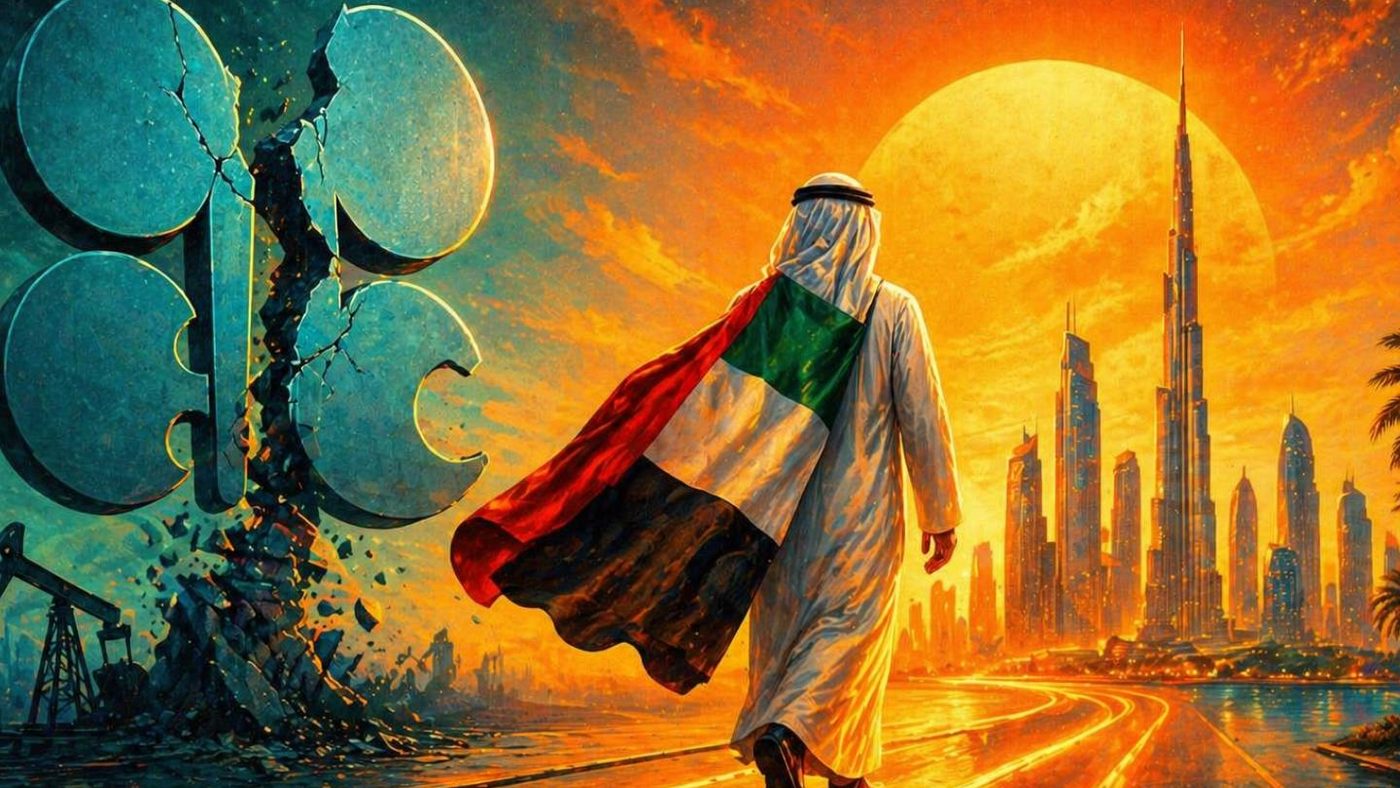
On 28 April 2026, the UAE announced it was leaving OPEC — effective 1 May. After 59 years of membership, the decision shocked global energy markets. Oil prices barely moved. But for the 3.5 million people living in Dubai, the story runs much deeper than crude oil.
The angle most outlets missed: this is as much about a deepening rivalry between Dubai and Riyadh as it is about oil production quotas.
At a Glance
59 yrs
OPEC membership 1967 – 2026
$111+
Brent crude/barrel prices barely moved
5M bpd
UAE oil target by 2027 now quota-free
1. The Real Story: This Is About Dubai vs Riyadh
Every outlet led with the oil production angle. The more important story for Dubai residents is what this exit signals about the UAE’s deepening rivalry with Saudi Arabia.
Energy Minister Suhail al-Mazrouei was diplomatic in public: “We have the highest respect for the Saudis for leading OPEC.” But look at what happened on the same day the exit was announced.
⚡ The tell: The UAE sent its foreign minister — not President Mohammed bin Zayed — to a Gulf leaders’ summit hosted by Saudi Crown Prince MBS in Jeddah. On the exact same day as the OPEC exit announcement. That was not a scheduling clash.
The friction points between UAE and Saudi Arabia
| What | What happened | Dubai angle |
|---|---|---|
| 💼 Investment rivalry | Saudi Vision 2030 competes directly with Dubai for foreign capital, HQs and tourism | Keeps Dubai sharp and competitive |
| ⚔️ Yemen fallout | UAE and Saudi backed opposing factions; Gulf coalition collapsed late 2025 | Each country now acts alone |
| 📺 Media exodus | Saudi broadcasters based in Dubai quietly relocated to Riyadh | Visible sign of cooling alignment |
| 🛢️ Quota disputes | UAE wanted higher output; Saudi Arabia said no for years | UAE chose growth over cartel loyalty |
| 🤝 Summit snub | MBZ skipped Jeddah summit on the day of the OPEC exit | The message was deliberate |
Karen Young of Columbia University’s Center on Global Energy Policy told NPR the exit “fits into the UAE’s need for flexibility with key energy consumers” — including China — and “a more openly competitive stance toward Saudi Arabia.”
🏙️ Good news for Dubai?
Yes. A sharper Saudi-UAE rivalry gives Dubai a stronger incentive to stay ahead — on business environment, expat quality of life and investment returns. The city that performs best when Gulf competition heats up is the one already at the top. That’s Dubai. See our take on Dubai’s long-term investment story.
2. What Actually Happened
On 28 April 2026, UAE state news agency WAM published the announcement. Gulf News reported the full statement: the UAE was leaving OPEC and OPEC+ effective 1 May — ending 59 years of membership that began when Abu Dhabi joined in 1967, four years before the UAE federation even existed.
A 59-year relationship that had been fraying
The UAE’s frustration with OPEC was not new. For years it pushed to raise its production quota — arguing its heavy investment through ADNOC (Abu Dhabi National Oil Company, the UAE’s state energy giant) deserved a bigger market share. Saudi Arabia held the line on cuts. Iraq and Russia broke their own quotas routinely. The UAE stayed disciplined. That asymmetry grated for years.
📌 What is OPEC — and why does it affect you in Dubai?
OPEC (Organisation of the Petroleum Exporting Countries) is a cartel of 12 oil-producing nations that collectively set production quotas to influence global crude prices. OPEC+ extends this to include Russia and others. Together they control ~40% of world oil output — which feeds directly into your petrol price, UAE government revenues and Dubai’s infrastructure budgets.
Timeline: how it unravelled
| Year | What happened |
|---|---|
| 1967 | Abu Dhabi joins OPEC — 4 years before the UAE is formed |
| 1971 | UAE federation formed; membership continues |
| 2021 | UAE nearly derails OPEC+ deal — rare public standoff with Saudi Arabia over quotas |
| 2024–25 | Saudi–UAE tensions deepen: Yemen, Red Sea, investment competition |
| Feb 2026 | Iran war begins; Iran attacks UAE with 550+ missiles and 2,200+ drones — a fellow OPEC member |
| 28 Apr 2026 | UAE announces exit from OPEC and OPEC+, effective 1 May |
The Iran war was the final accelerant. A fellow OPEC member firing hundreds of missiles at UAE cities made the case for staying in the cartel politically impossible.
3. Will Your Petrol Price in Dubai Change?
This is the question most Dubai residents are searching. The honest answer: not immediately — but eventually, yes.
UAE petrol prices are set monthly by the UAE Fuel Price Committee, indexed to global crude benchmarks — not directly to OPEC decisions. The exit doesn’t change the pricing mechanism. What it changes is the UAE’s long-term ability to flood the market with more oil once the Strait of Hormuz reopens.
Current petrol prices in Dubai — April vs March 2026
| Fuel grade | March 2026 | April 2026 | Change |
|---|---|---|---|
| Super 98 | AED 2.59/L | AED 3.39/L | 📈 +31% |
| Special 95 | AED 2.48/L | AED 3.28/L | 📈 +32% |
| E-Plus 91 | AED 2.40/L | AED 3.20/L | 📈 +33% |
| Diesel | AED 2.72/L | AED 4.69/L | 📈 +72% |
May 2026 prices are announced on 30 April. For the full analyst breakdown of what’s expected: UAE Fuel Prices May 2026: Relief Unlikely — What To Expect →
Short-term vs long-term — what changes for you
⏱️ Right now
Hormuz is blocked. UAE can’t export more oil regardless of OPEC status. No price change at the pump yet.
📅 Once Hormuz reopens
UAE pumps freely toward 5M bpd — no quota cap. More supply = downward pressure on crude. Petrol prices ease gradually.
Saxo Bank’s Ole Hansen told Gulf News inventories have been “drained” by the war, meaning UAE’s extra supply gets absorbed gradually — not in one crash. Relief is coming, but it won’t be overnight.
4. Why Did Oil Prices Not Move?
Brent crude held above $111/barrel when the news broke. In normal conditions, the world’s third-largest OPEC producer going quota-free would send prices lower immediately. These are not normal conditions.
🌊 The Strait of Hormuz explained
The Strait of Hormuz is a narrow waterway between Iran and Oman. Roughly 20% of the world’s oil normally passes through it — including most of the UAE’s exports. Since the Iran war began, it has been effectively closed to commercial shipping. The UAE has the oil. It doesn’t have the route to ship it.
Markets priced in future supply, not present supply. The announcement is a long-term signal — not today’s story.
OPEC by the numbers — after the UAE exit
| Column 1 | Column 2 |
|---|---|
| Members remaining | 11 (was 12) |
| Share of global oil output | ~36% (was ~40%) |
| UAE’s share of pre-war OPEC revenue | $77bn of $455bn/year (17%) |
| OPEC production, March 2026 | 20.79M bpd — down 27% due to Iran war |
| UAE production capacity | 4.8M bpd now; targeting 5M by 2027, 6M possible |
Jorge León of Rystad Energy — an independent Oslo-based energy research firm — put it plainly: “Losing a member with 4.8 million barrels per day of capacity removes one of the core pillars underpinning OPEC’s ability to manage the market.” OPEC becomes, in his words, “structurally weaker.”
5. What It Means for Dubai’s Economy
Dubai itself diversified away from oil decades ago — the emirate runs on trade, tourism, real estate and finance. But Abu Dhabi’s oil revenue funds federal spending across all seven emirates. A UAE free to pump more means a stronger federal balance sheet, and that flows directly into the city you live in.
The five things that change for Dubai residents
- 🏗️ Infrastructure: More oil revenue = continued mega-project investment — metro lines, roads, airports. Projects like the Dubai Gold Line metro depend on sustained federal spending capacity.
- 💼 Business environment: UAE competes as a sovereign, unconstrained energy state — more attractive than quota-bound neighbours for multinational HQs.
- 🏠 Property: Energy sovereignty reinforces long-term investor confidence. Analysts view the OPEC exit as strategic ambition, not instability.
- 💰 Cost of living: Long-term downward pressure on energy costs — not immediate, but directionally positive.
- 🌍 Regional standing: As Saudi Arabia’s OPEC influence weakens, Dubai’s neutral, globally-connected hub position strengthens relative to Riyadh.
Dr Sahitya Chaturvedi, Secretary General of the Indian Business and Professional Council Dubai under Dubai Chamber of Commerce, told Gulf News the move “may drive short-term volatility but enhance future supply responsiveness” — a net positive once disruptions ease.
6. What Comes Next — and When
| Date / Trigger | What to watch |
|---|---|
| 📅 30 April 2026 | New UAE petrol prices announced — first revision under the OPEC-free era |
| 📅 1 May 2026 | UAE formally exits OPEC and OPEC+ — production decisions fully independent from this date |
| 🌊 When Hormuz reopens | ADNOC starts ramping toward 5M bpd — this is when the exit’s real market impact begins |
| 🎯 2027 target | UAE aims for 5M bpd; potential to reach 6M bpd — long-term downward crude price pressure |
| 🏙️ Ongoing | Watch Saudi–UAE economic competition for investment, HQs and tourism — the rivalry is accelerating |
7. Frequently Asked Questions
Why did UAE leave OPEC in 2026?
The UAE left OPEC to gain full control over its own oil production, free from cartel quota restrictions. It had been frustrated with production caps for years, as they blocked its path to 5 million barrels per day by 2027. The Iran war accelerated the timeline — Iran, a fellow OPEC member, attacked the UAE with 550+ missiles and 2,200+ drones, making continued membership politically untenable. The exit also signals a broader strategic pivot away from the Saudi-led OPEC framework.
Will the UAE leaving OPEC lower petrol prices in Dubai?
Not immediately. Dubai petrol prices track global crude benchmarks, set monthly by the UAE Fuel Price Committee. The Strait of Hormuz remains blocked, so UAE can’t yet increase exports. Once Hormuz reopens and UAE ramps production freely, gradual downward pressure on Brent crude is expected — eventually feeding through to lower pump prices. This is a medium-term outcome, not an overnight one.
When does the UAE officially leave OPEC?
The exit is effective 1 May 2026. The announcement was made on 28 April 2026 via UAE state news agency WAM. The UAE’s OPEC membership dated back to 1967, when the Emirate of Abu Dhabi joined — four years before the UAE federation was formed in 1971.
Is the UAE OPEC exit linked to the Iran war?
Yes — significantly. Iran, a fellow OPEC member, fired ~550 ballistic missiles and 2,200+ drones at the UAE during the conflict, making it the most-attacked country in the region. This choked oil exports through the Strait of Hormuz and made continued OPEC membership alongside Iran politically and practically unsustainable. The government called it a long-term strategic decision, but the war accelerated it dramatically.
How does the UAE OPEC exit affect Dubai property and investment?
Indirectly, it’s positive. Greater oil production freedom strengthens the UAE’s long-term fiscal position, which supports UAE-wide infrastructure spending and investor confidence. Analysts view the exit as a signal of strategic ambition rather than instability. For a full breakdown of Dubai property fundamentals: Is Dubai Real Estate in a Bubble?
Which countries are still in OPEC after the UAE exit?
After 1 May 2026, OPEC has 11 members: Saudi Arabia, Iraq, Iran, Kuwait, Venezuela, Libya, Nigeria, Gabon, Congo, Equatorial Guinea and South Sudan. Saudi Arabia remains the dominant force. The UAE’s departure is far more significant than Qatar’s exit in 2019 — Qatar had already shifted focus to gas, while the UAE is one of OPEC’s largest oil producers.
What is ADNOC and what happens to it now?
ADNOC (Abu Dhabi National Oil Company) is the UAE’s state-owned energy company and one of the world’s largest oil producers. Under OPEC, it was bound by the UAE’s production quota. Outside OPEC, ADNOC is free to produce as much as it has capacity for — targeting 5 million bpd by 2027, with potential to reach 6 million bpd. The OPEC exit effectively unshackles its commercial ambition.
The Bottom Line
For daily life in Dubai right now, the immediate impact is limited. Petrol prices are set by a committee, not OPEC. Hormuz is still blocked. June will look much like May.
But the structural shift is real. The UAE is now a fully sovereign energy state — quota-free, openly competitive with Saudi Arabia, and positioned to be one of the world’s largest unconstrained producers when the region stabilises. For the millions who call Dubai home, that is a long-term foundation worth understanding.
Stay ahead of what’s changing in Dubai
Energy policy, petrol prices, metro expansion, property investment — DubaiFastLiving.com breaks down what matters to expats and residents, clearly and without the noise. Bookmark us and check back daily.