Dubai Court’s Chilling Message: ‘I Didn’t Know’ Won’t Save You From Jail or Deportation
A Dubai resident lost hundreds of thousands of dirhams in January this year in a cybercrime played out through Whatsapp. For this, this month, the Dubai Misdemeanours Court sentenced three men to two months in jail, a combined fine of Dh518,500, and deportation. But the most interesting part of the
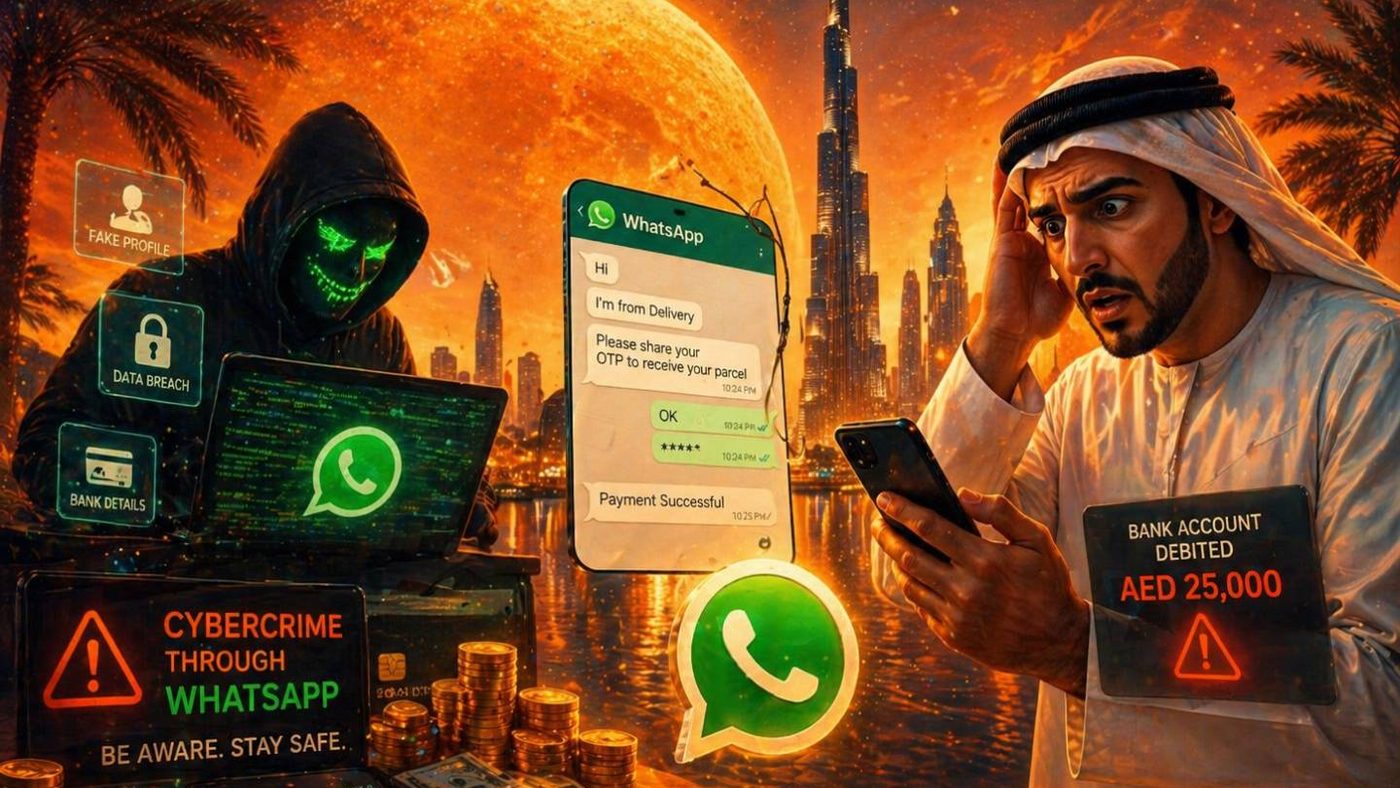
A Dubai resident lost hundreds of thousands of dirhams in January this year in a cybercrime played out through Whatsapp.
For this, this month, the Dubai Misdemeanours Court sentenced three men to two months in jail, a combined fine of Dh518,500, and deportation.
But the most interesting part of the story is neither the fine nor the deportation, but a warning to anyone who plays the ‘I did not know it was stolen money’ card.
The Dh518,500 verdict is a step-by-step map of exactly how online scams in Dubai operate, and who UAE courts hold responsible when the money moves
How This Cybercrime Played Out
- The victim clicked on what appeared to be a link to a consumer protection service.
- He was redirected to WhatsApp, where a person posing as a government specialist instructed him to enter his bank card number and CVV (the three-digit card verification value on the back of your card) to process a complaint and pay a small administrative fee.
- He transferred a small initial amount first — a standard trust-building step in this scam type — before large sums were rapidly withdrawn from his accounts.
The Punishment
The three defendants received the stolen funds in instalments, forwarded them to other accounts, and kept a portion for themselves.
The Dubai Misdemeanours Court convicted all three.
| Defendant | Fine | Role |
|---|---|---|
| First | Dh346,000 | Largest recipient of stolen proceeds |
| Second | Dh72,500 | Intermediary |
| Third | Dh100,000 | Intermediary |
| Total fines | Dh518,500 | Matched precisely to amounts received |
| Sentence | 2 months jail | All three, in-person |
| Post-sentence | Deportation | All three |
The court confirmed that evidence from the victim’s statements, bank records, authority investigations and the defendants’ own confessions was consistent and proved guilt beyond reasonable doubt.
The Legal Point That Changes Everything
What does “possessing funds from electronic fraud” mean — and does UAE law care whether you knew the money was stolen?
This is the verdict’s most important detail for Dubai residents and expats to understand.
The three men convicted were not the architects of the scam. They were the local financial handlers — what fraud investigators call money mules (people who receive and forward stolen funds, whether or not they fully understand the criminal chain they are part of).
The court was explicit:
For expats in Dubai, this creates a clear exposure point.
Scam networks increasingly recruit local handlers with offers of easy commission — “just receive this transfer and send it on.”
The Dubai court’s position is that accepting that role, in those circumstances, is criminal. Jail, a fine equal to the full amount handled, and deportation are the consequences.
How WhatsApp Scams in the UAE Actually Work
The bank fraud Dubai residents encounter most often follows a small number of well-worn templates. The consumer-protection impersonation used in this case is one of the most common:
- The hook — a message, link or call impersonating a government service such as consumer protection, RTA, DEWA or a bank’s fraud department
- The redirect — victim is taken to WhatsApp or a copycat website where a fake “agent” continues the interaction in a professional tone
- The legitimisation — the agent uses official-sounding language and requests a small initial transfer to “verify” the account or “complete” a procedure
- The extraction — once card number and CVV are provided, full account access is possible; large withdrawals follow within minutes
- The laundering chain — stolen funds pass through multiple local accounts rapidly, each handler taking a cut before the money moves on or is withdrawn as cash
The speed of the final step is deliberate. By the time a victim notices unusual activity and calls their bank, the funds have already passed through several hands.
Major Abdullah Al Shehhi, Director of the Cyber Investigations Department at Dubai Police, has previously warned through Gulf News that cybercriminals increasingly send WhatsApp messages from familiar names or contacts to appear credible — and that any request for bank card details via WhatsApp, from any source, is a fraud attempt without exception.
What You Need To Know
Dubai Police and UAE cybercrime authorities maintain several official reporting channels for online scams in Dubai:
- Do not click suspicious links, even from numbers you recognise
- Do not transfer any amount, including a small one — this is the trust-building step that precedes the larger theft
- Never share your CVV with anyone over WhatsApp, phone or any website you reached via a link
- Screenshot everything — messages, numbers, usernames, links
- Report at ecrimehub.gov.ae — accepts reports even if no money was lost; attach screenshots directly
- Report via the Dubai Police app — file under the eCrime section from your phone
- Call your bank’s fraud line immediately if you have already shared card details
Abu Dhabi residents report via the Aman Service: toll-free 800-2626 or SMS to 2828. Residents of Sharjah and Ajman contact emirate police on 901.